Hair Transplant Clinic Kentucky
Our Kentucky Clinic at a Glance
This page introduces Nova Medical Hair Transplant Kentucky: who works here, how the Louisville clinic is set up, and what happens at each stage of a transplant, from FUE and FUT planning to long-term follow-up.
You will see how the team plans a hairline, treats thin areas and responds to the specific worries patients bring in. We also cover what each procedure involves, what it offers, and how each step is adjusted to the person in the chair.
Most of us notice our hair before anything else in the mirror. It frames the face and shapes first impressions, which is why people spend real time and money keeping it in good condition.
When hair starts to thin, recede or fall out, the cause might be genetics, age, stress or a health condition, and the effect on confidence can be real. Hair loss is very common and carries no shame, yet it is still often linked, unfairly, with looking older or less energetic.
Our view at Nova Medical Hair Transplant Kentucky is simple: losing hair should not mean losing confidence. The clinic offers restoration designed to look natural, so patients can feel at ease with how they look again.
Everything happens at one address: 2950 Terra Crossing Boulevard in Louisville, KY 40245. Patients travel here from all over the state, including Bowling Green, Owensboro and Covington, and the consultation, procedure and follow-up visits all take place in the same clinic with the same in-house team that built the plan.
Want an honest view from people who have been through it? Browse the comments in our Google reviews, then phone the clinic or visit during opening hours, Monday to Friday from 9am to 6pm and Saturday from 10am to 2pm, to meet the team and look around first.
Plans Shaped Around Every Hair Texture
Why Your Hair Type Changes the Plan
No two patients arrive with the same hair, and the plan has to reflect that. Straight, wavy, curly and tightly coiled hair each behave differently when grafts are taken and placed. Coverage alone is not the goal; the result should suit your texture and the concerns you came in with, which is why every plan at the Kentucky clinic is built individually.
How Texture Affects the Work
Texture shapes nearly every decision in a transplant. Curly and coily hair often grows from curved roots below the skin, so extraction calls for extra care. Fine, straight hair reflects more light and can need a higher graft count before an area reads as full.
The Louisville team, overseen by Dr. Alexander Digenis, works with every hair type. Each graft is handled carefully from removal to placement so it settles in beside your own hair without standing out, and that attention to detail is what makes a result look like it belongs to you.
Planning for Your Particular Concern
Texture is only part of it. Plans also account for the specific problem: a hairline that has moved back, a crown that has thinned, a patchy beard or an old scar. A receding front gets a soft, irregular edge that suits your face, while thin zones are planned for even density across the whole area.
Some hair types are more prone to problems such as traction alopecia, and those cases need a more careful strategy. The plan looks at why the hair was lost as well as where, aiming for a result that holds up and looks right over time.
Why a Custom Plan Matters
A personal plan is what turns a medical procedure into a result you are happy to live with. Your texture, growth pattern, face shape and goals all feed into it. At Nova Medical Hair Transplant Kentucky, success means hair that looks and feels like yours, not just more of it.
Why Patients Choose a Hair Transplant in Kentucky
For many people in Kentucky, a hair transplant is the step that finally replaces years of short-term fixes. Your own follicles are moved to where they are needed, so the new hair matches in color, feel and behavior. Unlike hairpieces or creams that only work while you keep using them, transplanted hair is a lasting change that grows in with the hair around it.
Upkeep is easy as well. When the moved hair begins to grow, you treat it like the rest of your hair: wash it, cut it and style it as usual. There are no special products and no daily routine, which is a big part of why patients see it as a practical long-term choice.
Plans at Nova Medical Hair Transplant Kentucky are written for each patient. A receding front, general thinning across the crown or a few isolated bald spots each call for a different approach, and the aim is always a balanced result that fits your features.
Because transplanted follicles keep growing year after year, the procedure is an investment that does not need repeating like a monthly product. Set against what temporary options add up to, it is often the more economical choice in the long run.
FUE is also minimally invasive, with a fairly short recovery period. Many patients are back to their normal routine in a few days and describe any soreness as mild and brief. Natural-looking growth, little upkeep and a lasting effect explain why more people across Kentucky are choosing a transplant to restore their hair.
Before & After Gallery
Every result shows the grafts it took and what the same plan costs. Tap one to see your plan.
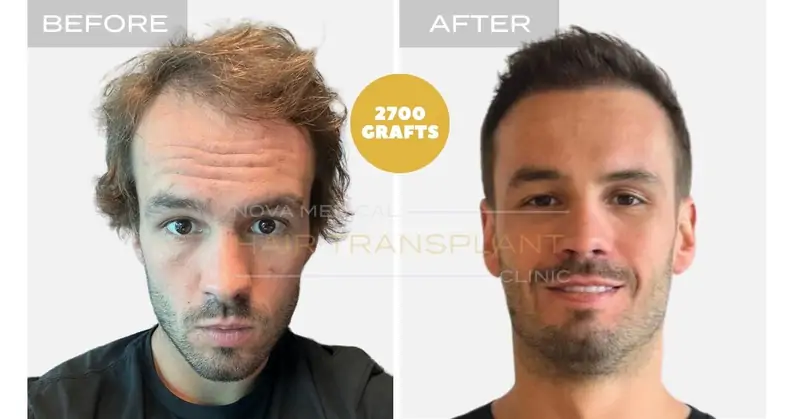
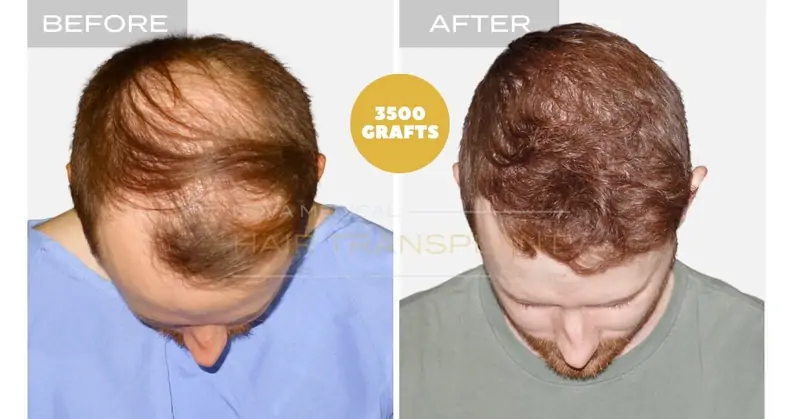
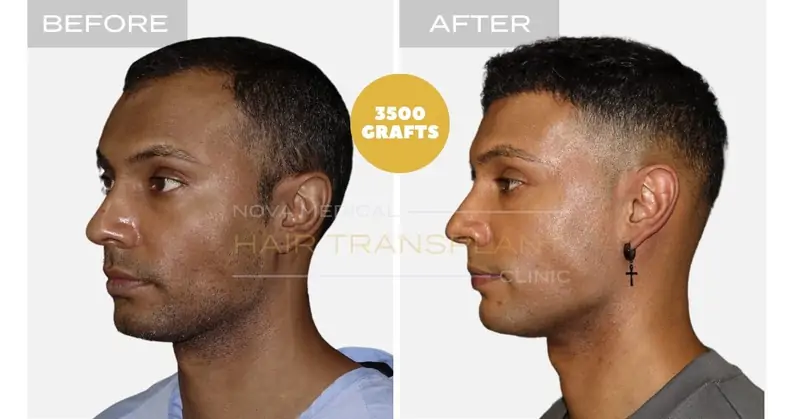
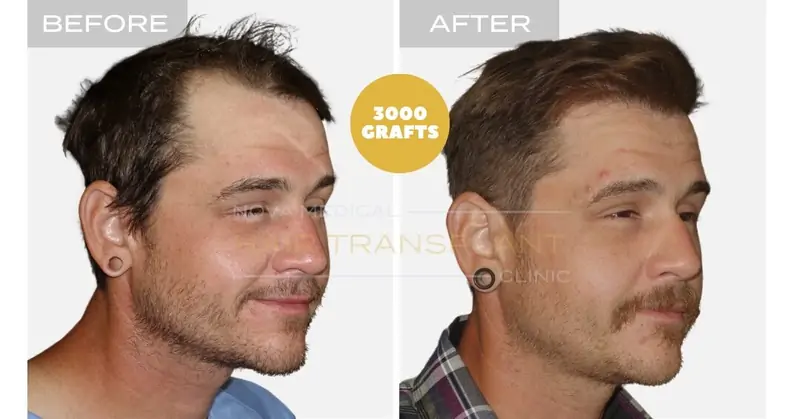
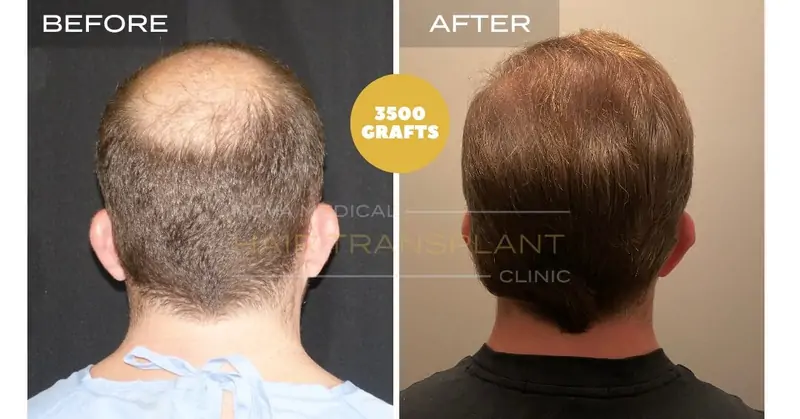
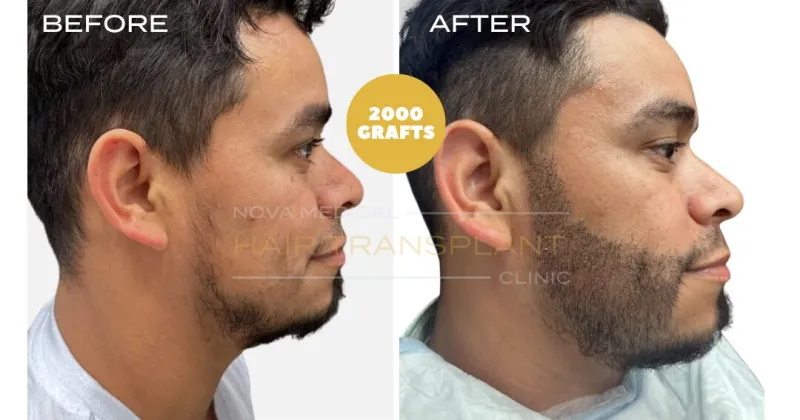
Estimates only - your exact plan and price are confirmed at your free assessment. Monthly payment options available, as low as $270/mo, subject to credit approval. Results vary and are not guaranteed.
Disclaimer: Outcome or results shown are not guaranteed and may vary from patient to patient. Cosmetic procedures are associated with possible risks and complications, always have a thorough discussion with your surgeon. Images posted with consent.
What is DHI?
Direct Hair Implantation (DHI) takes follicles out one at a time, exactly as FUE does, but changes how they are put back. Each graft is loaded into a narrow, pen-shaped implanter and placed straight into the thinning area, without a separate step to open recipient sites first.
Since the implanter sets the depth and angle as the graft goes in, the method fits small, detailed zones well, such as refining the front edge or rebuilding a temple point. It can cover larger areas too, though the day tends to take longer.
At the Louisville clinic, DHI is one option on the table, not a package we push. Some patients ask for it by name, and after the scalp exam a few learn that standard FUE fits their case better; the team explains the reasons clearly.
Interested in DHI? Say so when you book, and the team will have the implanter pens ready at your consultation to show how they work and discuss whether they suit your donor hair and your goals.
The DHI Process
The preparation is the same as for any transplant. The team maps the donor area, measures how much hair has been lost and where, and agrees on a hairline and density goal with you before treatment starts.
After the scalp is numbed, follicles are removed individually and passed directly to the team member loading the implanters. Each loaded pen then places its graft at the planned angle, so removal and placement continue side by side through the session.
Recovery follows the usual pattern for individual-graft work: small crusts clear in around ten to fourteen days, a temporary shed comes next, and new growth starts to appear after a few months. Follow-up visits at the clinic let the team check how the grafts are taking.
Comparing DHI and FUE
The two techniques remove grafts identically, one follicular unit at a time. Where they part ways is the placement stage, when the grafts go back into the scalp.
In standard FUE, the team opens all the recipient sites across the area first and then fills them with grafts. It moves quickly over large areas, has a long research record and leaves only small scattered dots in the donor zone, which is why it remains the usual choice for most cases at the clinic.
In DHI, the pen creates the site and places the graft in one action. That control can help along a fine hairline, but the slower pace makes it less suited to very high graft counts.
The method is chosen after your assessment, never in advance. Dr. Alexander Digenis reviews your donor density, hair characteristics and goals and approves the approach, and you receive the plan in writing before your procedure day.
What is FUE?
Follicular Unit Extraction, or FUE, moves hair by taking single follicles from the back or sides of the scalp rather than a strip of skin, so no linear scar is left behind. A fine punch roughly 1 millimeter across lifts each small graft, leaving tiny marks that heal fast and are hard to spot.
With no long incision, you can still wear your hair short without a visible line. Collecting grafts one at a time takes patience, but a natural, lasting result makes that time well spent.
FUE works across many hair types and textures, from straight and wavy to curly and coily. It is often a strong choice for younger patients, for people of African, Asian, Middle Eastern or Latin heritage, and for anyone with a limited donor supply or a liking for short haircuts.
Its precision also makes it the usual technique for facial hair work, such as beards, mustaches and sideburns, and for fuller eyebrows as well.
What is FUT?
Follicular Unit Transplantation, or FUT, takes a narrow strip of scalp from the back of the head, where hair is usually more resistant to thinning. The opening is then closed carefully with stitches so the scar stays fine and easy to hide.
The strip is separated under magnification into its natural follicular units, usually 1 to 4 hairs each. Those grafts are then placed into thin or bald areas at the angle and direction your hair already grows, for a result that blends in.
Want to read more about either technique?
But your hair can be
One Kentucky clinic and one in-house team, from your first visit to your last check-up.
Request a Free Consultation
Free, no obligation • Appointments this week
Your Procedure Day, Step by Step
~2 minutes readA good result starts with choosing a clinic and team you trust to guide you. At Nova Medical Hair Transplant Kentucky, every procedure is overseen by Dr. Alexander Digenis, a board-certified plastic surgeon who directs the medical team, in a clinic set up for safety, cleanliness and patient comfort.
First comes an in-depth consultation, where the team takes the time to understand what is bothering you about your hair. They go over your health history, previous hair restoration work, and your everyday hair care. A hands-on scalp exam follows, checking quality, texture, density and the pattern of loss to confirm whether surgery is right for you.
If you are a candidate, a date is set and your personal plan is prepared. On the day, you arrive in the morning and change into a comfortable gown, robe and slippers. Before anything starts, you meet with the doctor once more to confirm the goals, expectations and approach.
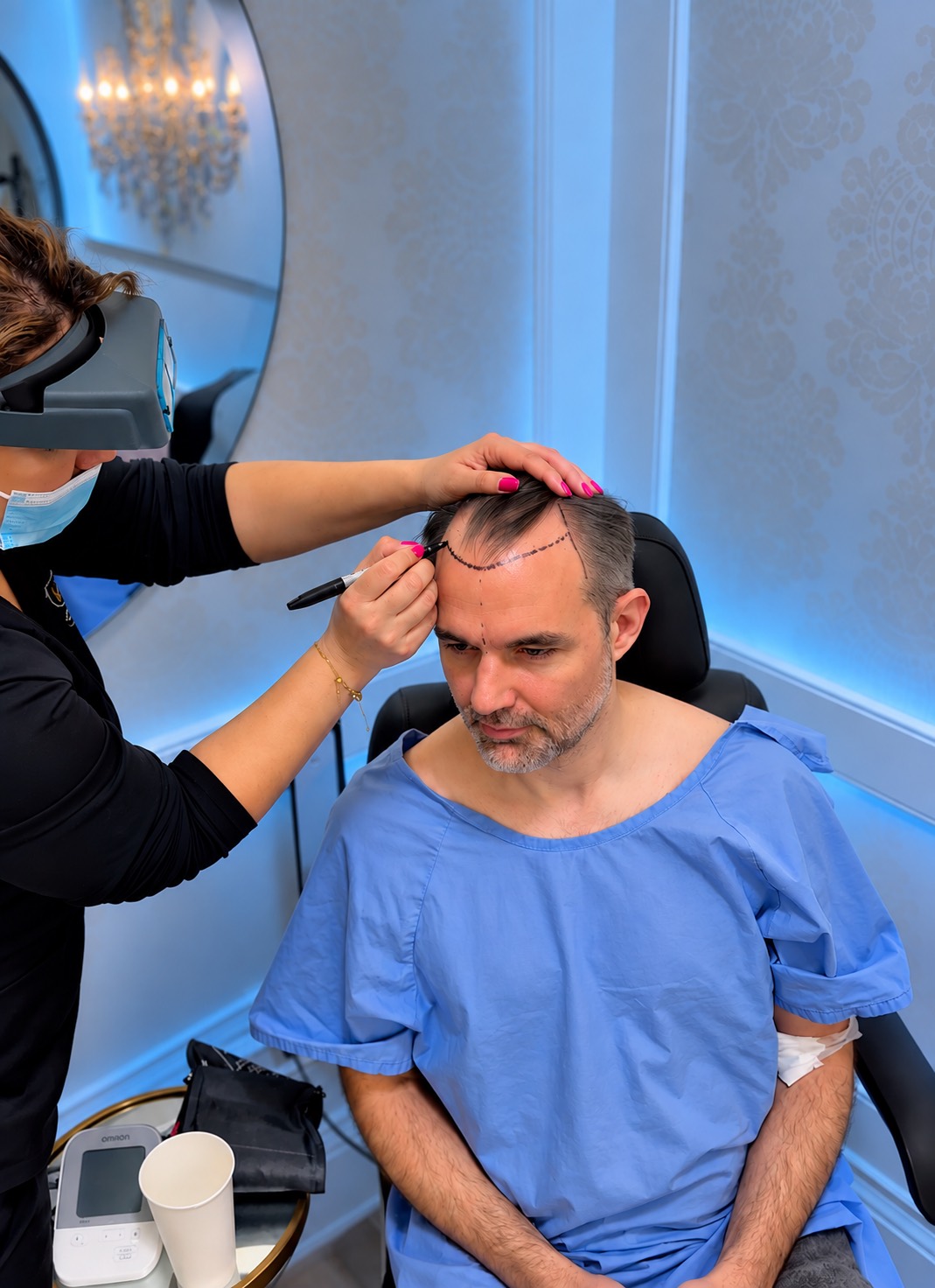
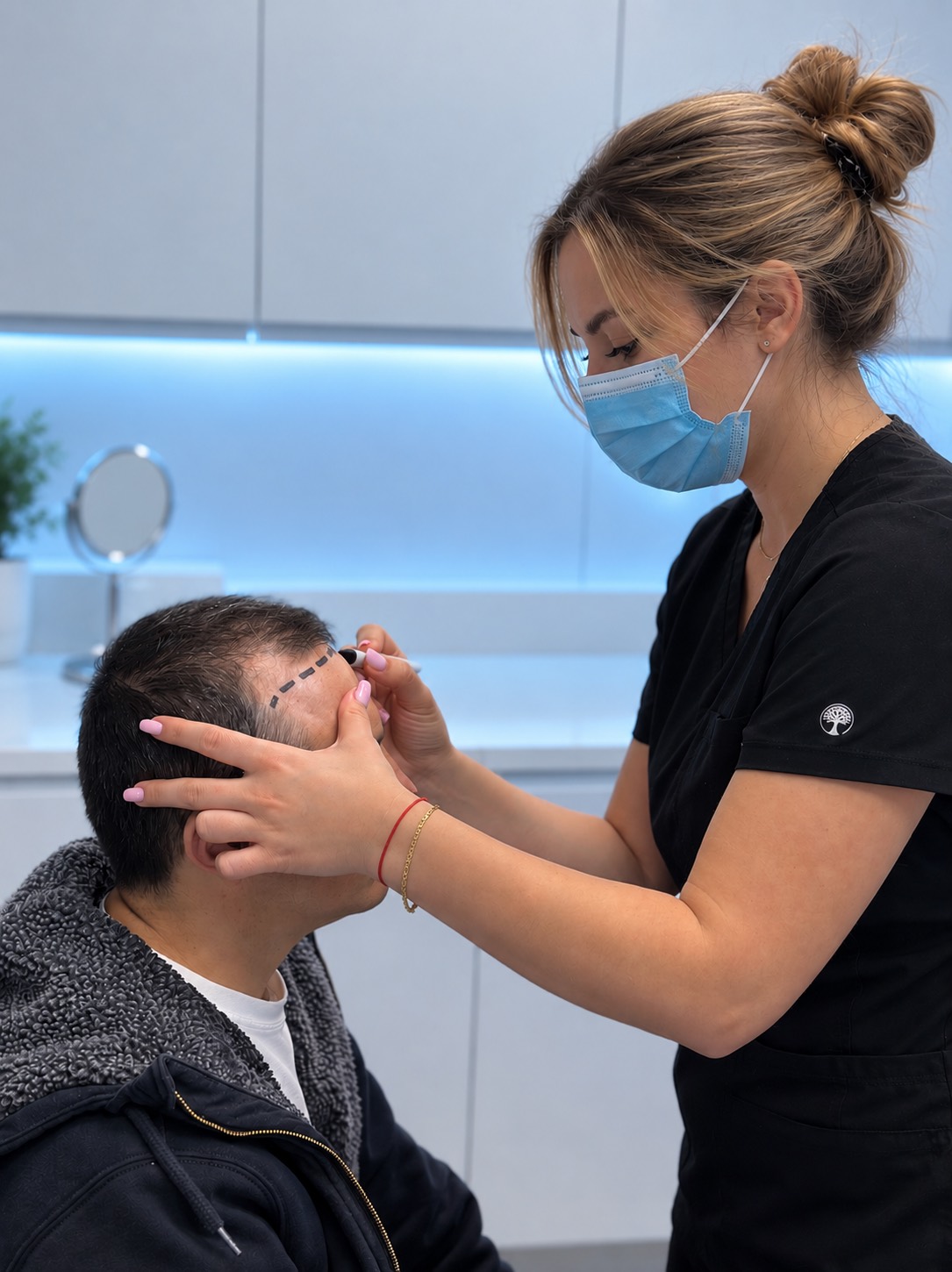
Hairline design comes next: either your existing line is restored or a new one is drawn with care. Balance, density and a natural look guide every choice, and photos are taken to record your starting point and to guide the team as the day goes on.
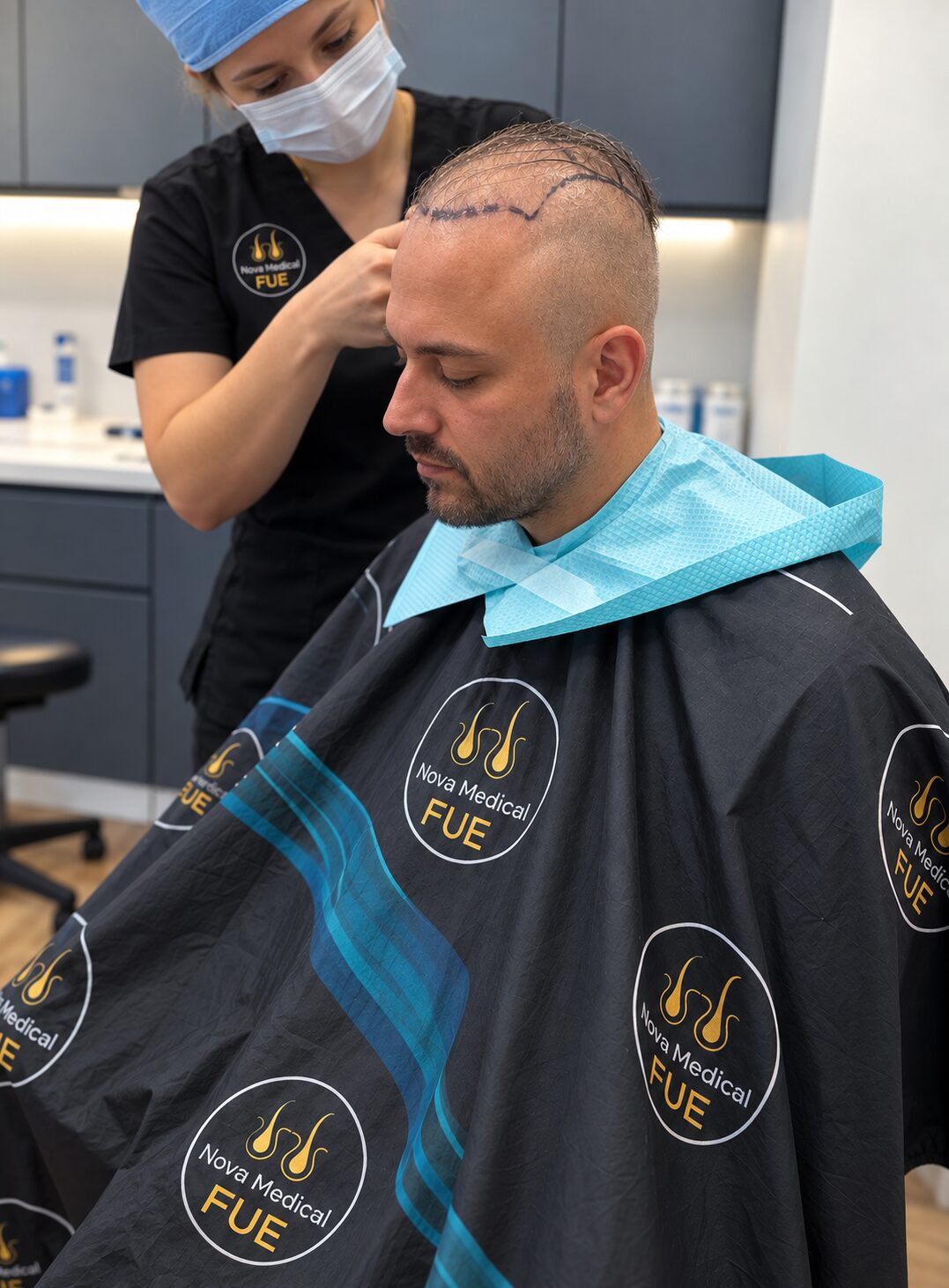
Your plan then sets the technique, FUE (Follicular Unit Extraction) or FUT (Follicular Unit Transplantation, the strip method). With FUE, the donor area is clipped short; with FUT, only the strip zone is trimmed.
When everything is ready, you move to the procedure room and local anesthetic is given so the area is numb. Working under magnification, the team removes the grafts with care; in FUE, each follicle comes out on its own.
As each graft is removed, a technician counts its hairs and stores it chilled in a labeled tray. Single-hair grafts are reserved for the front edge, and two- and three-hair grafts go in the rows behind, adding fullness without a heavy look at the hairline.
During this part, patients are encouraged to settle in: bring headphones for music or a podcast, or just rest. Many find it far more relaxing than they expected.
A midday lunch is provided, and short breaks to stand up, stretch or use the restroom are built in. A team member stays with you the entire time, so any question gets an answer right away.
Once harvesting is done, every graft is checked under a microscope for quality. Placement follows, a step often described as stick and plant: a tiny site is made for each graft and filled carefully so the hair follows natural direction, spacing and density.
Each site is angled to match how your nearby hair already falls, whether it brushes forward, to the side or around a crown swirl. Grafts sit a little farther apart along the very front and closer together behind it, which keeps the new hairline from looking artificial.
For this stage you rest in a reclining chair while the team completes the final placements. Many patients are surprised by how comfortable and smooth the process feels.
Before you head home, a nurse reviews your written aftercare instructions, gives you a soft cap for the trip and books your first follow-up at the Louisville clinic. You also leave with the clinic phone number in case questions come up during the first nights.
For first-hand accounts and results, take a look at our patient reviews and stories and see how Nova Medical Hair Transplant Kentucky approaches hair restoration.
Healing and New Growth
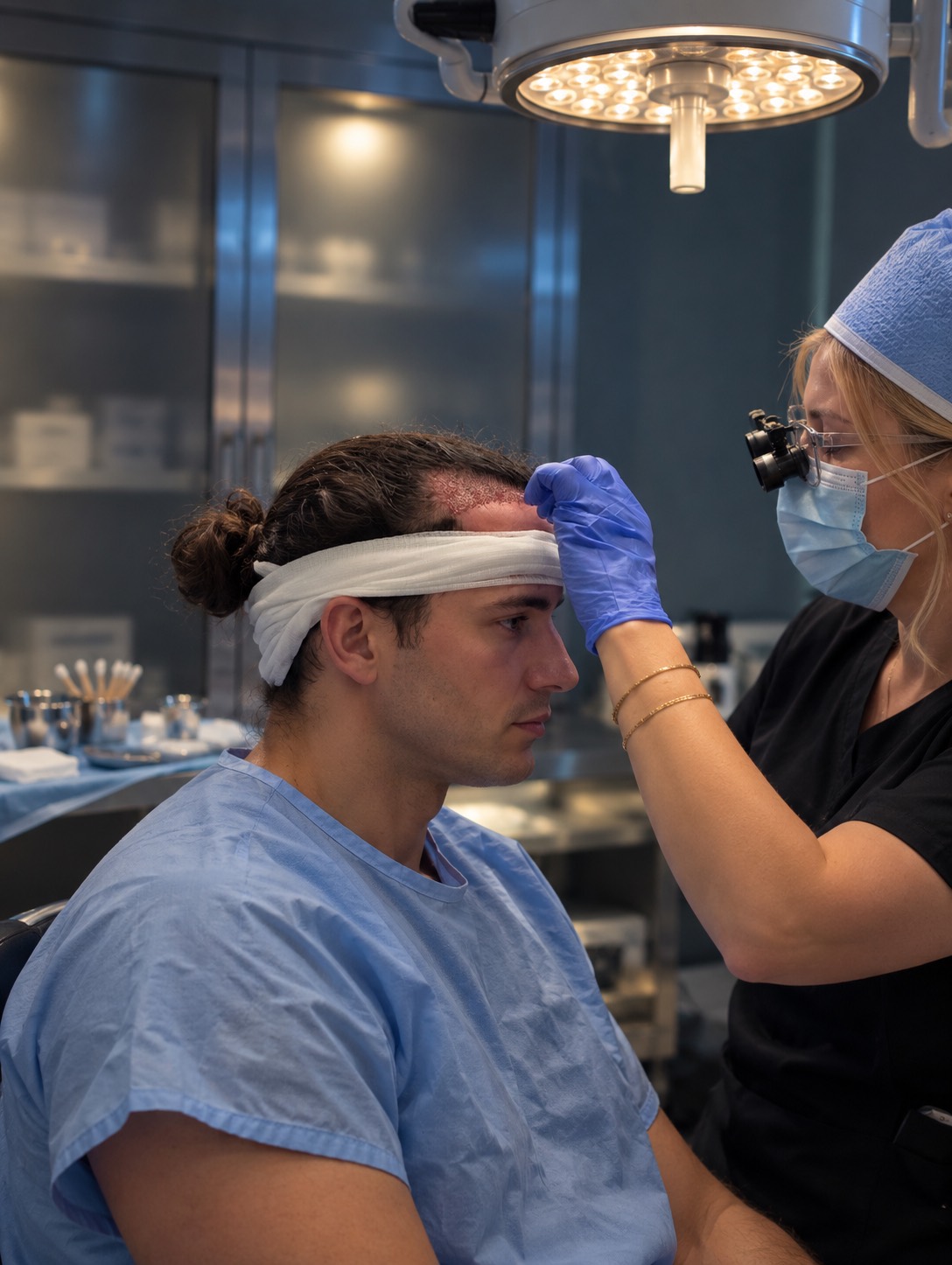
After your procedure at Nova Medical Hair Transplant Kentucky, you will not leave wrapped in heavy bandages. Most patients go home without visible dressings and feel comfortable, and the reshaped hairline is visible straight away, even before the new hair grows.
Healing is supported by a post-op plan made for you. Patients are often given antibiotics and an anti-inflammatory to limit swelling in the first days, and a mild pain reliever is suggested for the first couple of nights so sleep comes easily.
Most patients go back to work and light routines within a day or two, since downtime is minimal. Washing your hair is allowed soon after the procedure, and the team gives you clear, gentle steps to follow while the scalp heals.
For exercise, lifting weights or swimming, plan to wait 1 to 2 weeks before doing anything strenuous so healing is not disturbed.
New growth usually becomes visible at around 4 to 6 months. Some patients choose to support growth and density with Minoxidil, a topical treatment applied each night.
The full result develops slowly over 12 to 18 months, and the transplanted hair goes on growing naturally for life, giving you a lasting, refreshed look.
Looking After Your Result Over the Years
Transplanted follicles stay, but the hair around them may still thin over time. Many patients combine surgery with a maintenance plan, such as medication or PRP treatments, to keep their own hair as full as the transplanted area.
The 12-month follow-up keeps your progress on track, and the team is glad to see you yearly after that. A quick photo and density check helps catch new thinning early so the plan can be adjusted.
Everyday habits help too: a gentle shampoo, a hat during long hours in the sun, and good sleep and nutrition keep the scalp healthy for years.