
Hair Transplant Recovery
What to Do and What to Avoid During Hair Transplant Recovery in Kentucky
Considering a hair transplant but unsure what healing involves, or whether the procedure suits you at all? A free assessment at our Louisville clinic is the fastest way to learn whether you are a good fit for an FUE hair transplant in Kentucky.
Recovering from a hair transplant is simpler today than many people expect, which helps explain why more patients now choose it for thinning hair and pattern baldness. Healing differs a little from one person to the next and with the technique used, but most patients pass through a first healing stage of about 7 to 10 days, when mild swelling or tenderness is normal.
The early healing is usually easy to manage, while the final result arrives slowly. Across the next several months the new hair starts to come through, and the full result is usually visible at 12 to 18 months. It takes patience, and most patients find the wait worthwhile.
Before & After Gallery
Every result shows the grafts it took and what the same plan costs. Tap one to see your plan.
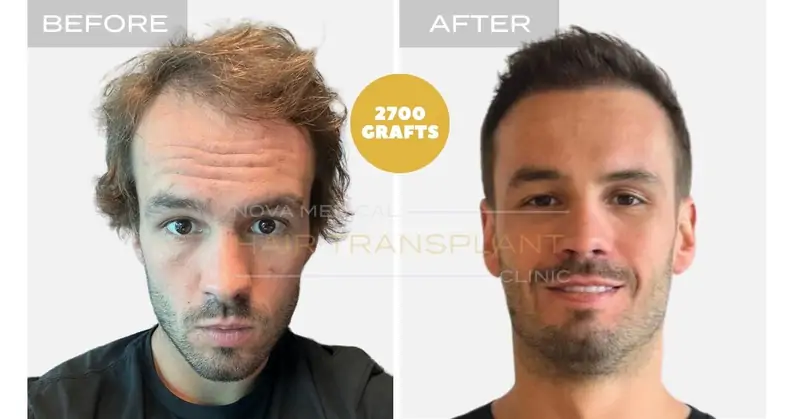
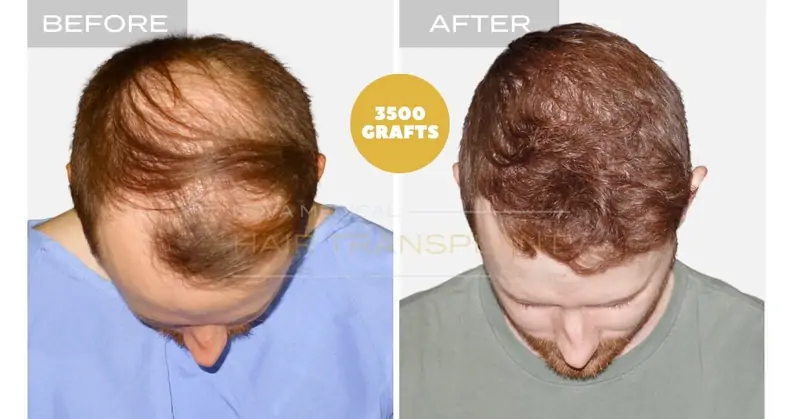
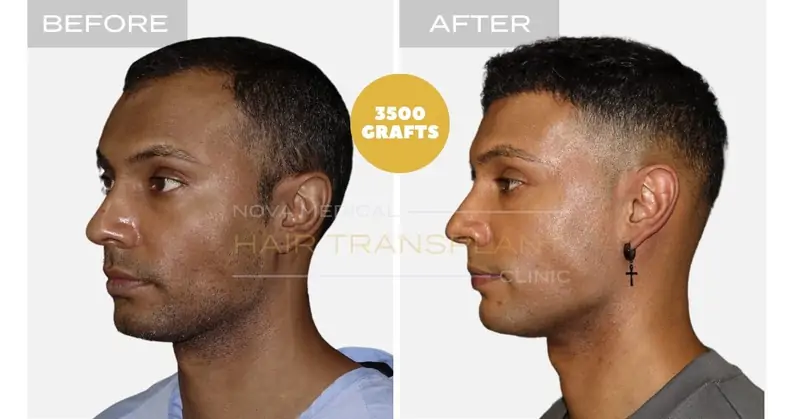
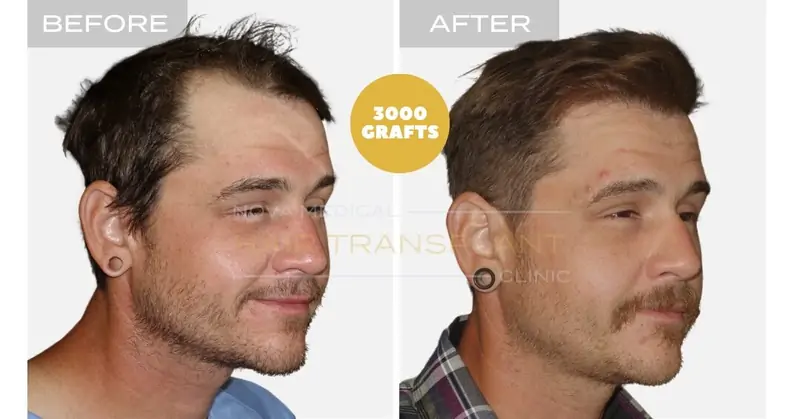
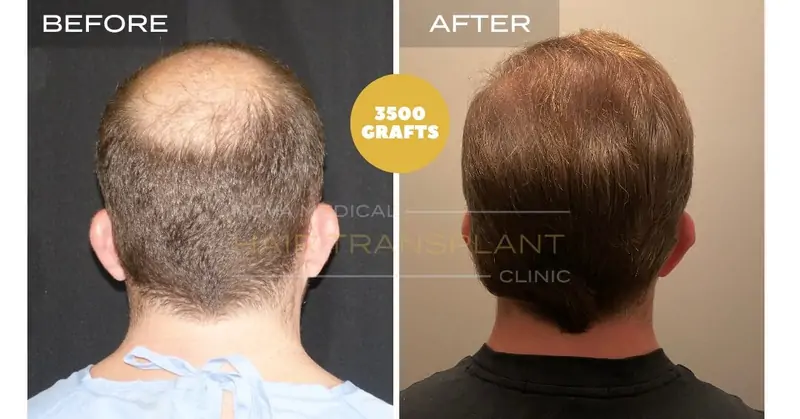
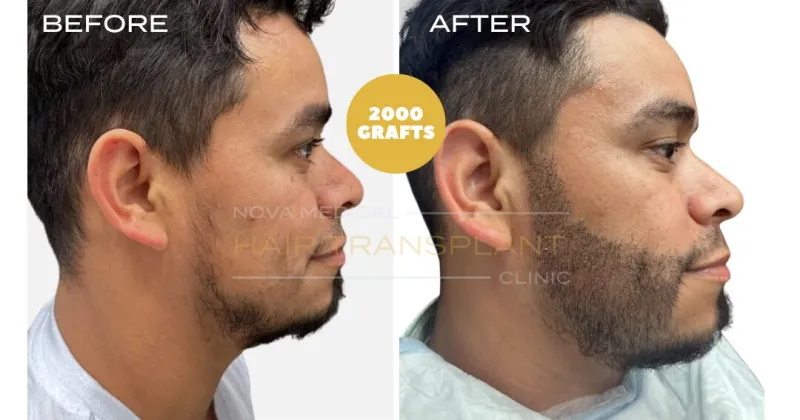
Estimates only - your exact plan and price are confirmed at your free assessment. Monthly payment options available, as low as $270/mo, subject to credit approval. Results vary and are not guaranteed.
Disclaimer: Individual results differ and are not guaranteed. Every cosmetic procedure carries possible risks and complications, so talk them through in detail with your surgeon. Photos are shared with patient consent.
What Happens After Your Procedure
Every scalp heals at its own pace, but most of our Kentucky patients follow the same general stages. Treat this as a guide to what is typical and what your grafts need along the way.
On the day after your hair transplant in Kentucky, some soreness, swelling or a tight feeling across the scalp is entirely normal. Small scabs or crusts may also appear around the new grafts as your body starts to heal. The team at Nova Medical Hair Transplant in Louisville sends you home with written aftercare instructions to keep recovery on track. These usually include keeping hot water off the scalp, washing with a mild sulfate-free shampoo and avoiding anything that could press on or rub the treated area.
For several days you will also be asked to avoid hard exercise, bending over and heavy lifting so the grafts stay in place. Your comfort and healing matter most to us, so we keep the lines of communication open the whole way through. The team will check in, follow how you are healing and answer questions whenever they come up. These first days have a real effect on the final result, so follow your aftercare plan carefully, rest when you need to and treat your scalp gently while it is most fragile.
About a week after your hair transplant in Kentucky, the first clear signs of healing appear. Most of the swelling and soreness should have eased a great deal by this point, and the small scabs around the grafts begin to loosen and drop off on their own as the scalp keeps healing.
The team may advise you to keep washing with a gentle, non-irritating shampoo and will remind you not to scratch or pick at any scabs that remain, since that can disturb the healing follicles and affect your result. It still matters to avoid anything that causes heavy sweating or knocks to the scalp, such as hard workouts or tight hats. You may also see some of the transplanted hairs shed around now. This is normal and expected as part of the hair growth cycle, and new growth follows in the coming months. The specialists at Nova Medical Hair Transplant Kentucky are on hand to guide you through each stage.
A month after your hair transplant in Kentucky, you may begin to see early progress, such as faint new growth and continued healing where the grafts were placed. Mild itching or a sensitive scalp is also common at this point as the follicles settle into place. Keep following the aftercare plan from the team, which means washing with a mild shampoo, not touching or scratching the scalp, and avoiding activities that cause heavy sweating or irritation. Protect your scalp from the sun as well, either by staying in the shade or wearing a loose hat whenever you are outside.
Some of the transplanted hairs may shed, and this is an expected part of recovery. This temporary shedding, often called shock loss, gives way to new growth over the months that follow. Keeping to your aftercare plan and handling your scalp gently gives the new hair its best chance to grow in strong and healthy.
Around month six, the new hairs have grown enough to visibly reshape your hairline and part. Many are still thin and pale, and they continue to thicken over the months ahead.
A year after your hair transplant in Kentucky, most patients see a clear gain in overall density and coverage. The moved follicles have settled into their new place and grow healthy hair that blends in with the hair around it. Any leftover redness or small marks should be hard to spot, if they show at all. Many patients at this point are enjoying the full benefit of the procedure, with a fuller hairline and more confidence. The result is meant to last, but a healthy scalp and hair care routine still matters. Gentle washing, sun protection and avoiding harsh chemical treatments all help the result keep looking its best.
With a Written Plan.
Begin with a free assessment at our Louisville clinic on Terra Crossing Boulevard.
Request a Free Consultation
No obligation • Same-week availability
What TO Do
- Keep the printed aftercare sheet from the Louisville clinic handy and look it over each morning
- Keep your head raised on extra pillows or sleep propped up in a recliner for the first several nights
- Finish the prescribed antibiotic course, and use pain relief only as instructed
- Once you are cleared to wash, let mild, watered-down shampoo flow over the grafts, then rinse with clean water poured from a cup
- From week two on, wear a loose, breathable hat any time you are outdoors
- Eat meals with plenty of protein and stay well hydrated while your scalp heals
- Allow scabs to loosen under the shower and come off in their own time
- Come to each follow-up visit so the team can take progress photos and answer your questions
What NOT To Do
- No lifting weights, running or carrying heavy loads for two weeks
- Keep out of pools, hot tubs, lakes and rivers for about a month
- Limit long stretches in direct sunlight through the first month
- Avoid alcohol for the first week, because it can increase bleeding risk
- Set aside cigarettes and vapes while healing, since nicotine reduces blood flow to the grafts
- Avoid scratching, combing or brushing over the grafts during the first two weeks
- Keep tight hats, helmets and headbands off for roughly three weeks
- Wait six weeks or more before any hair dye, perm or chemical straightening
Your Growth Milestones
The stages of the year when most patients see a real difference.
Days 1-10
First Healing Stage
Weeks 2-4
Hairs Shed, Roots Remain
Months 3-4
New Hair Comes Through
Months 6-9
Fullness Starts to Show
Months 12-18
Final Result Fills In
Understanding Shock Loss
From about week two to week four, most patients notice many of the transplanted hairs washing out. The hair you can see falls away, but the follicle under the skin stays put. That is why this phase is seen as routine rather than as a graft that failed.
Being moved sends each follicle into a brief resting phase. A few months on, it wakes up and grows a new hair that stays. Some patients choose PRP in this period to help the existing hair around the new grafts.
Important Note: Avoid Blood-Thinning Supplements or Medications
Everyday supplements are easy to forget about, but some, such as ginseng, garlic extract or omega-3s, along with certain anti-inflammatory drugs, can raise the chance of bleeding around the time of a hair transplant.
To keep your procedure safe, the Louisville clinical team may ask you to pause any blood-thinning products for a time, unless you need them for medical reasons.
Tell your doctor about every medication and supplement you use, including anything bought over the counter. That lets us shape a care plan that keeps you safe and helps your recovery go smoothly.
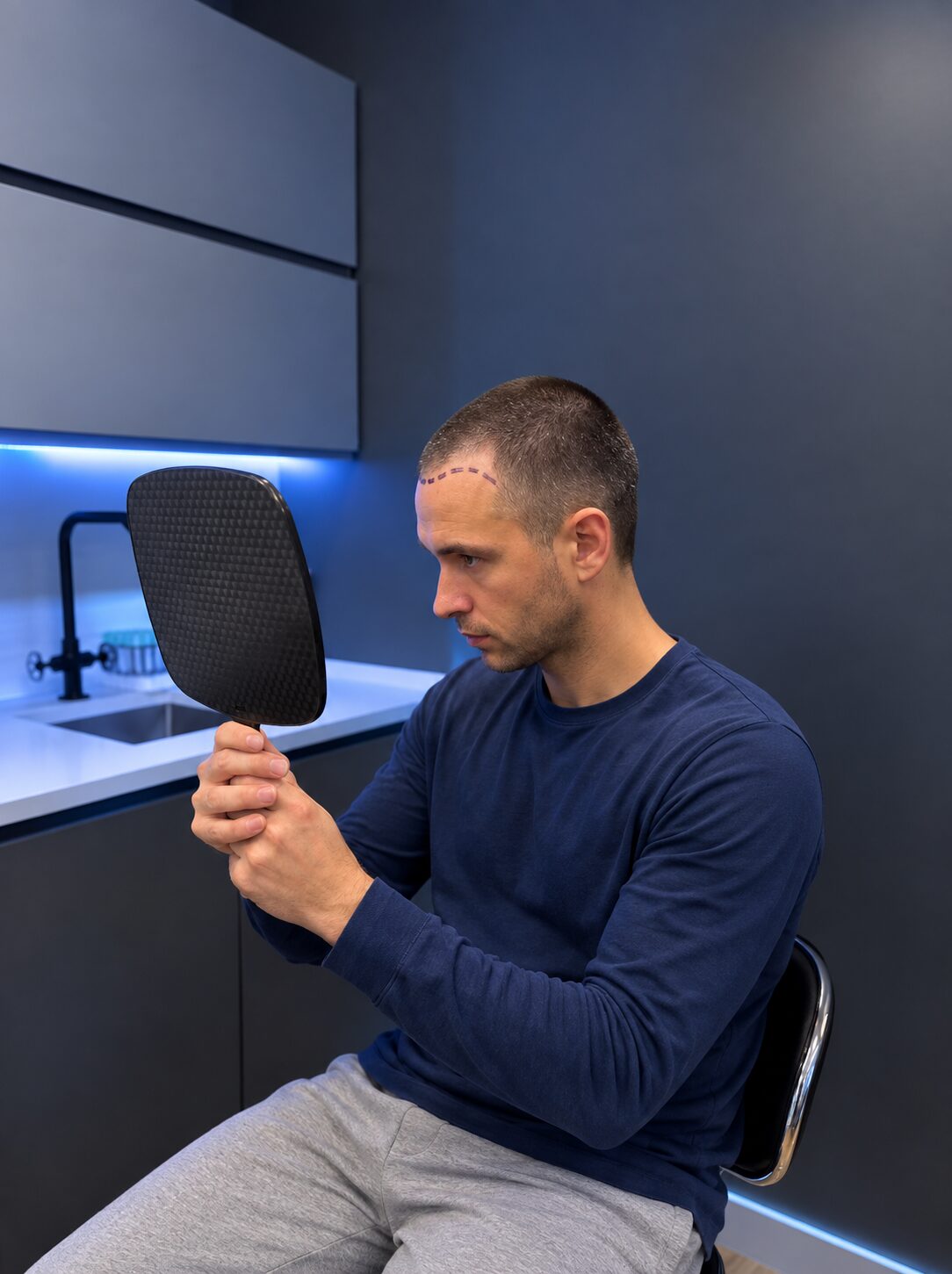
Hair Transplant Aftercare: What to Follow and What to Skip
Medications: With modern microsurgical methods, infection after a hair transplant is uncommon. Even so, you will be given an antibiotic prescription as a precaution to help healing and lower the chance of problems.
Shield Your Scalp From the Sun: If you are healing through Kentucky's summer months, or spending a lot of time outside, give your scalp extra protection. For the first two weeks, wear a loose, breathable hat outdoors. After that, apply a broad-spectrum sunscreen to the scalp regularly for at least a year to protect the new grafts.
Skip Scrubbing and Rough Washing: For the first few days after the procedure, you will be asked to use a gentle spray-on shampoo so the fragile grafts are not disturbed. From then on, wash with clean, lukewarm water and do not rub or scratch the scalp. Many patients find mild, scalp-friendly products help keep the area calm while it heals.
If anything about your recovery is unclear, the team at Nova Medical Hair Transplant in Louisville is here to help from your consultation to your final follow-up. Each patient's path is different, and we will build a care plan around your needs and goals. Call (502) 591-6777, Monday to Friday from 9am to 6pm or Saturday from 10am to 2pm. Dr. Alexander Digenis oversees your aftercare plan and checks how you are healing at each follow-up.
Getting Ready for Your Procedure
-
1
Bring a Full List of What You Take
Make a list of your prescriptions, vitamins and supplements and bring it to your assessment. We will show you which ones to stop before surgery and for how long.
-
2
Skip Hair Dye for 6 to 8 Weeks
If you color your hair, do not dye it for a week or two before the procedure and wait 6 to 8 weeks afterward. When your doctor gives the go-ahead, choose a gentle, low-irritation color product so the healing scalp is not irritated.
-
3
Come Clean and Comfortable
Shampoo your hair at home on the morning of surgery without any styling products, and wear a top that buttons or zips so nothing needs to be pulled over your head afterward.