Hair Transplant Louisville
Louisville Patients, Start Here
If you live in Louisville and are thinking about a hair transplant, this page is written for you. It covers where our clinic is, why so many local patients choose it, and the FUE and other methods used to rebuild hair that looks like your own.
Read on for how the team designs new hairlines, adds density where hair has thinned and plans around your particular worries. Along the way we explain what each treatment offers, what procedure day looks like and how every stage is fitted to what you want.
Hair says a lot before we say a word. It frames the face, colors how others see us and affects how we feel walking into a room, so it makes sense that people care about keeping it healthy.
Yet plenty of people are unhappy with their hair. Whether thinning comes from genes, stress, getting older or a medical issue, watching it go can wear down self-esteem. Hair loss is ordinary and nothing to hide, but old stereotypes still tie it to aging and lost vitality.
Nova Medical Hair Transplant Kentucky exists so that people in Louisville do not have to live with that feeling. The clinic's restoration work is designed to look natural and to give patients back a look they are comfortable showing.
For Louisville residents, the clinic is right in town at 2950 Terra Crossing Boulevard, Louisville, KY 40245, convenient for patients from the East End, St. Matthews, Jeffersontown, Middletown and Prospect. Put the address into your map app before you set out, and call (502) 591-6777 if you need help finding us on the day.
Wondering what your neighbors thought? See what local patients have shared in our Google reviews, then ring the clinic or drop in on weekdays from 9am to 6pm or Saturdays from 10am to 2pm to see the clinic and say hello to the team in person.
Hair Restoration Matched to Your Hair Type
One Plan Does Not Fit Every Head of Hair
Louisville patients bring every kind of hair to their consultation, and each needs its own approach. Straight hair, waves, curls and tight coils all respond differently during harvesting and placement. Adding grafts is only half the job; the other half is making sure they suit your texture and what you came in to fix, so each plan here starts from scratch.
Why Hair Character Matters
The way your hair grows guides the whole plan. Curls and coils usually grow from roots that bend beneath the scalp, so they are removed slowly and gently. Straight, fine strands let more light through, which can mean more grafts are needed for an area to look dense.
Under the direction of Dr. Alexander Digenis, the clinic's technicians work with hair of every type. Grafts are taken out and set in place with steady attention so the new growth mixes in with your own, and that care is what lets a result suit the person wearing it.
Your Concern Sets the Priorities
Plans also respond to what is actually bothering you, whether that is a retreating front, a thin spot at the crown, a sparse beard or scarring. A hairline is rebuilt with a gentle, natural edge suited to your face, and thinning zones are filled with an eye on even, consistent coverage.
Hair that has been pulled tight for years can develop traction alopecia, and that kind of loss needs a carefully thought-out plan. The team treats the cause as well as the bare patch, so the result keeps looking good for years.
What Personal Planning Gives You
Planning around the individual is what separates a good-looking result from a procedure that simply adds hair. Your growth pattern, texture, features and hopes all shape the plan, and the goal for every Louisville patient is hair that looks and feels completely like their own.
Why Louisville Locals Choose Nova Medical
Patients from around Louisville often tell us they chose a transplant after trying the temporary routes first. Moving your own follicles means the new hair matches yours in shade and texture, and it keeps growing without wigs, sprays or topical products. With the clinic in town, your consultation, procedure and check-ups are all handled locally.
Life after the procedure is low-effort, too. Once the new hair comes through, it behaves like the rest: shampoo it, get it cut and style it as you always have. There is nothing special to apply each morning, which is why patients see it as a practical change rather than another routine.
Every Louisville patient gets a plan of their own. A hairline that has crept back, thinning across the top and small bald patches are each treated differently, with the goal of a balanced look that suits your face.
The hair that is moved keeps growing for years, so the money goes into one lasting change instead of an ongoing monthly bill. Over time, many patients find it is the better-value route compared with temporary products.
Same-Day FUE also lets local patients recover at home that night, with a fairly brief healing period. Most people are back to their usual week within a few days, and discomfort is usually mild and short-lived. With natural growth, little maintenance and an easy trip home afterward, a transplant in their own city makes sense to many people in Louisville.
Before & After Gallery
Every result shows the grafts it took and what the same plan costs. Tap one to see your plan.
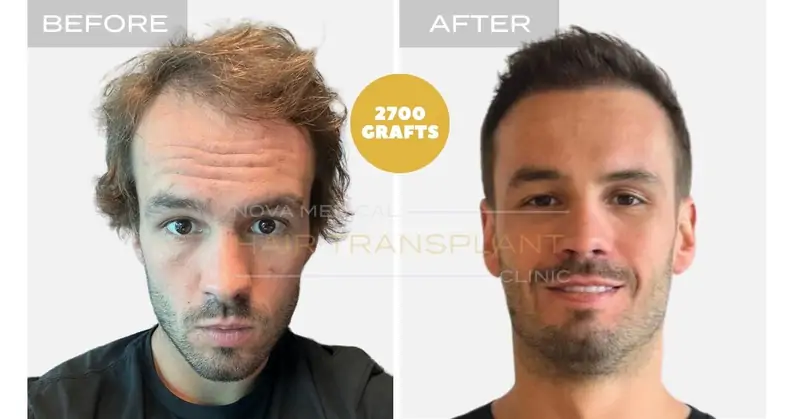
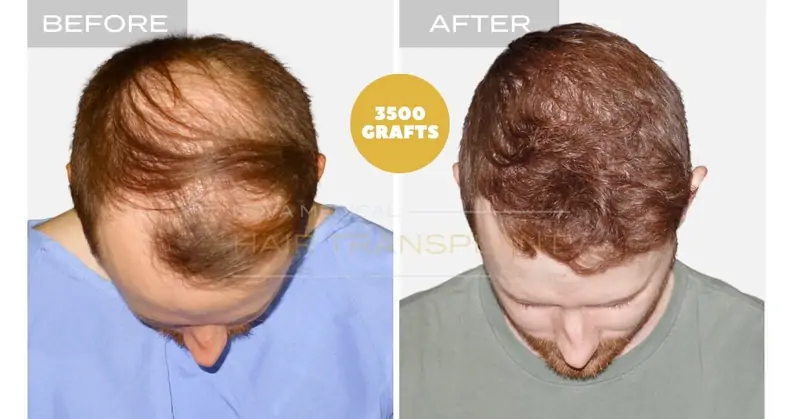
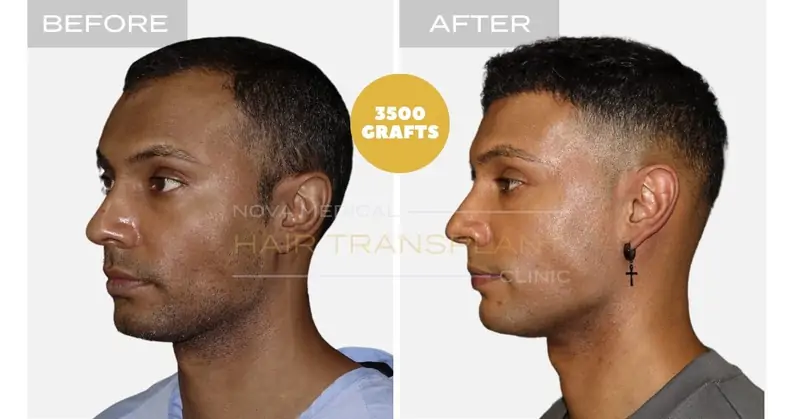
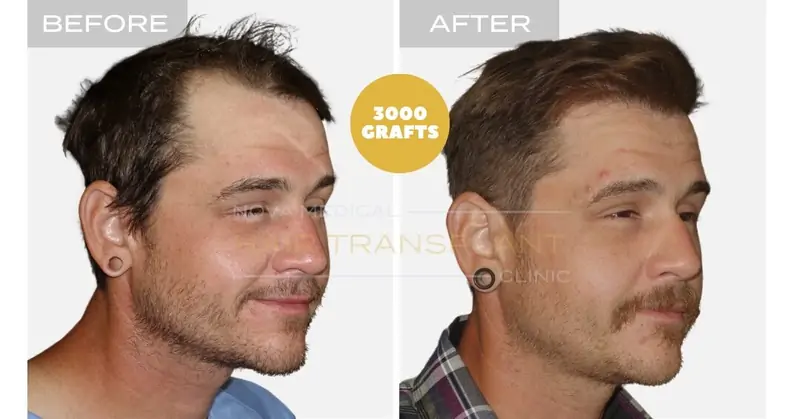
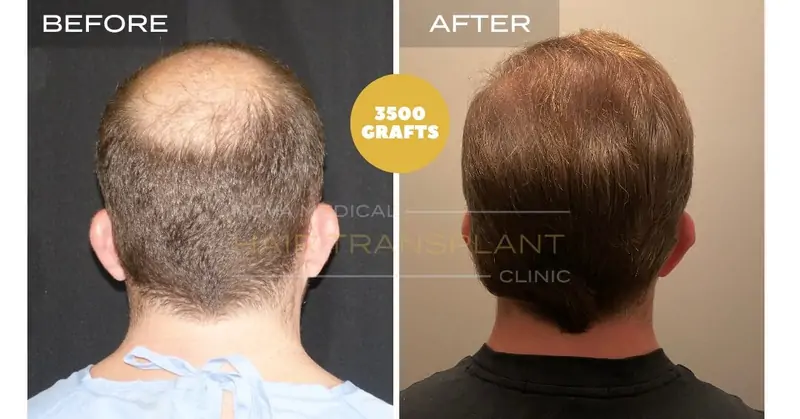
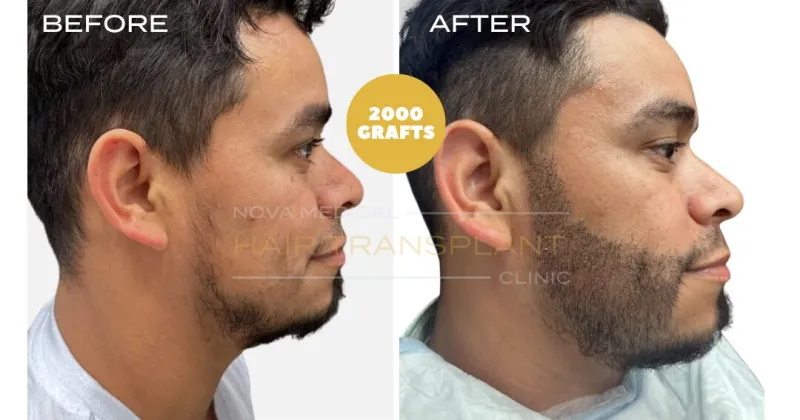
Estimates only - your exact plan and price are confirmed at your free assessment. Monthly payment options available, as low as $270/mo, subject to credit approval. Results vary and are not guaranteed.
Disclaimer: Outcome or results shown are not guaranteed and may vary from patient to patient. Cosmetic procedures are associated with possible risks and complications, always have a thorough discussion with your surgeon. Images posted with consent.
Meet DHI, the Pen Method
Direct Hair Implantation (DHI) uses the same one-by-one follicle removal as FUE, but places grafts differently. Instead of making all the openings first, the team loads each graft into a thin implanter shaped like a pen and inserts it into the thinning area in one movement.
The pen gives fine control over angle and depth as each graft goes in, which makes DHI useful for small, precise jobs like refining a hairline or rebuilding a temple. Bigger areas are possible as well, but they take more time.
Louisville patients sometimes arrive set on DHI. The team treats it as one of several options, and if the scalp exam shows that standard FUE would serve you better, you will hear exactly why, in plain language.
Curious about DHI? Mention it when you call to book. The team can bring the pens to your consultation, walk you through how they are used and help you decide whether they fit your donor hair and the look you want.
DHI Step by Step
Planning always comes first. The donor area is mapped, the amount and pattern of hair loss is measured, and you and the team settle on a hairline and target density before treatment begins.
With the scalp numbed, single follicles are taken out and handed to a team member who loads them into the pens. Each graft is then placed at its planned angle, so extraction and implantation run in parallel for the rest of the day.
Healing matches other single-follicle procedures. Tiny crusts usually clear in ten to fourteen days, a temporary shed follows, and fresh growth begins a few months later. Check-in visits at the Terra Crossing Boulevard clinic let the team follow your progress, and they are easy to fit in when you live nearby.
DHI or FUE?
Grafts are collected the same way with both techniques, one follicular unit after another. What sets them apart is how those grafts are returned to the scalp.
Classic FUE has the team prepare every recipient site across the treatment zone before filling them. It covers big areas efficiently, has been studied extensively and leaves only faint scattered dots in the donor area, so it is still the method most Louisville patients receive.
DHI combines site creation and placement in a single pen motion. That precision can be useful at a delicate front edge, but the slower pace makes it less practical for very large sessions.
Your technique is settled after the assessment, not beforehand. Dr. Alexander Digenis weighs how dense your donor area is, what your hair is like and what you want, then signs off on the method, and you get the full plan in writing before procedure day.
How FUE Works
FUE, short for Follicular Unit Extraction, harvests hair follicle by follicle from the back or sides of your head, so there is no strip removed and no straight-line scar. A tiny punch about 1 millimeter wide is used for each graft, and the small marks it leaves heal quickly and fade into the hair.
Without a long cut, short haircuts stay an option and no line shows. Harvesting grafts individually is slow and steady work, but natural, lasting growth is worth the wait for most patients.
The method suits nearly every hair type, whether straight, wavy, curly or coily. Many younger patients choose it, as do people of African, Asian, Middle Eastern or Latin background and anyone whose donor hair is limited or who prefers a short style.
Because it is so precise, FUE is also used to fill in beards, mustaches and sideburns, and to thicken eyebrows for a fuller frame.
How FUT Works
With FUT, or Follicular Unit Transplantation, the team removes a thin band of scalp from the back of the head, where hair tends to hold up against thinning. The area is then stitched closed with care so the remaining scar is narrow and easy to cover.
Under the microscope, that band is cut into natural follicular units, typically holding 1 to 4 hairs. These are placed into thinning or bald spots following the angle and direction of your existing hair, so the new growth looks like it was always there.
Looking for a deeper guide to each method?
But your hair can be
Right here in Louisville, with one in-house team from your consultation to your final visit.
Ask for a Free Consultation
No cost, no pressure • Openings this week
What Happens on Procedure Day
~2 minutes readRestoring your hair starts with picking a clinic you are comfortable trusting. For Louisville patients, Nova Medical Hair Transplant Kentucky offers a local team whose work is supervised by Dr. Alexander Digenis, a board-certified plastic surgeon, with each case planned under the doctor's direction and carried out in a clean, safe and comfortable setting.
It begins with an unhurried consultation, where the team listens to what you want to change. You will talk through your health background, earlier hair treatments, and your daily hair routine. The team then examines your scalp, looking at hair quality, texture, density and loss pattern to see whether a transplant is a good option for you.
Once you are approved, your date is booked and your plan is built. You come in on the morning of the procedure and swap into a gown, robe and slippers. A last check-in with the doctor then confirms what you want, what to expect and how the day will run.
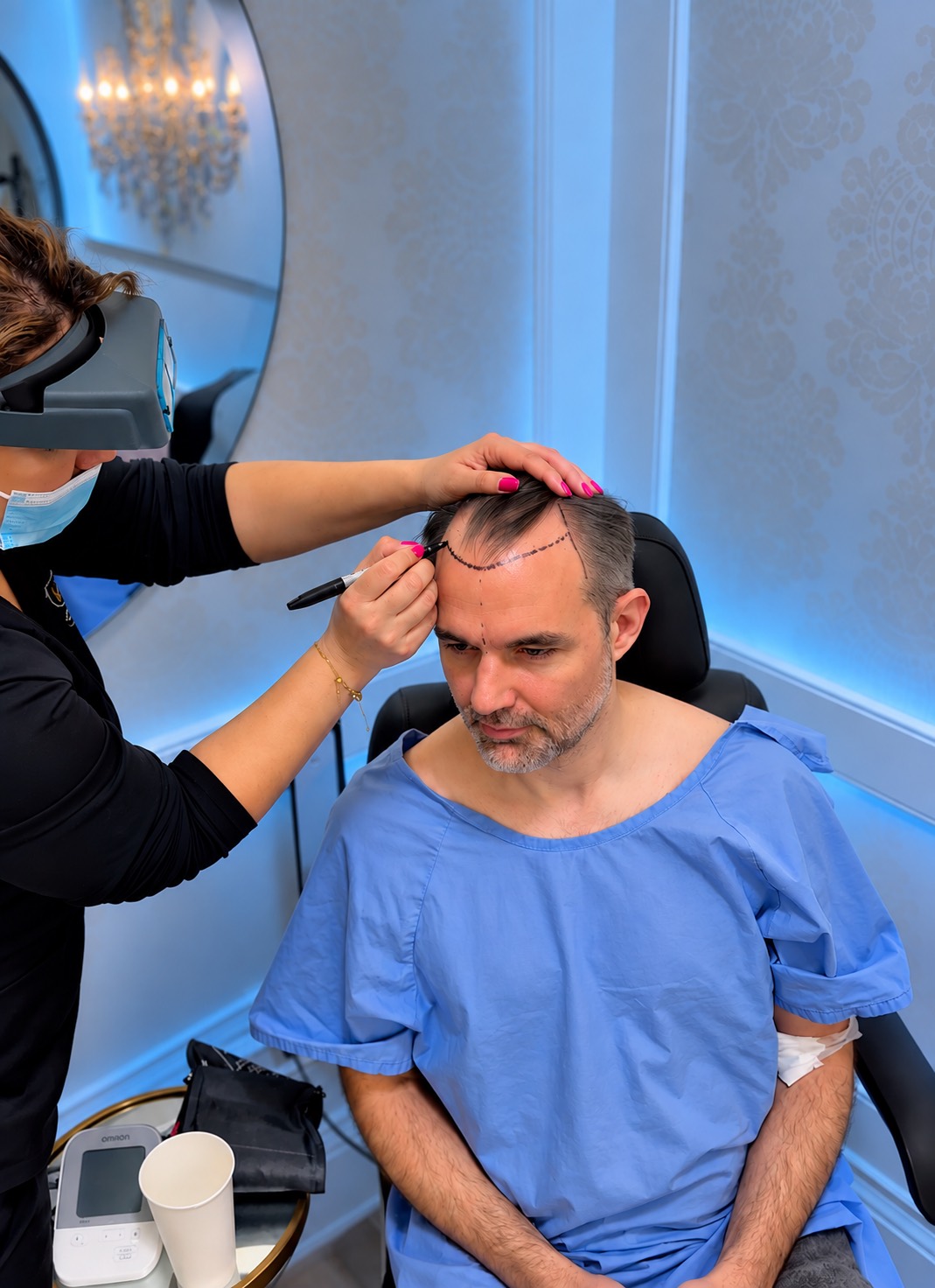
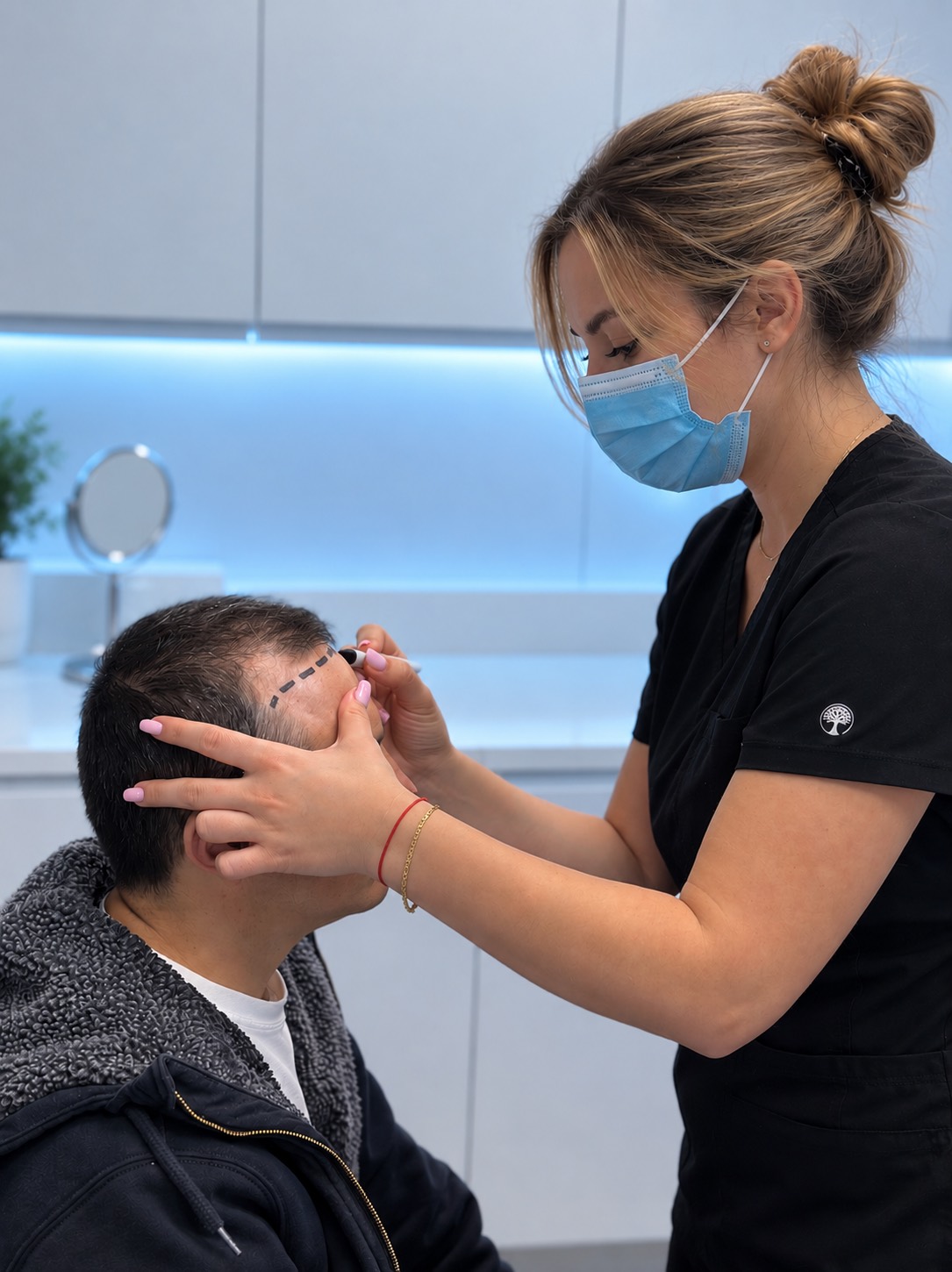
Then the hairline is designed. The team either rebuilds the edge you have or carefully sketches a new one, keeping balance, density and a natural look front of mind. Photos are taken beforehand to capture where you started and to serve as a guide during the session.
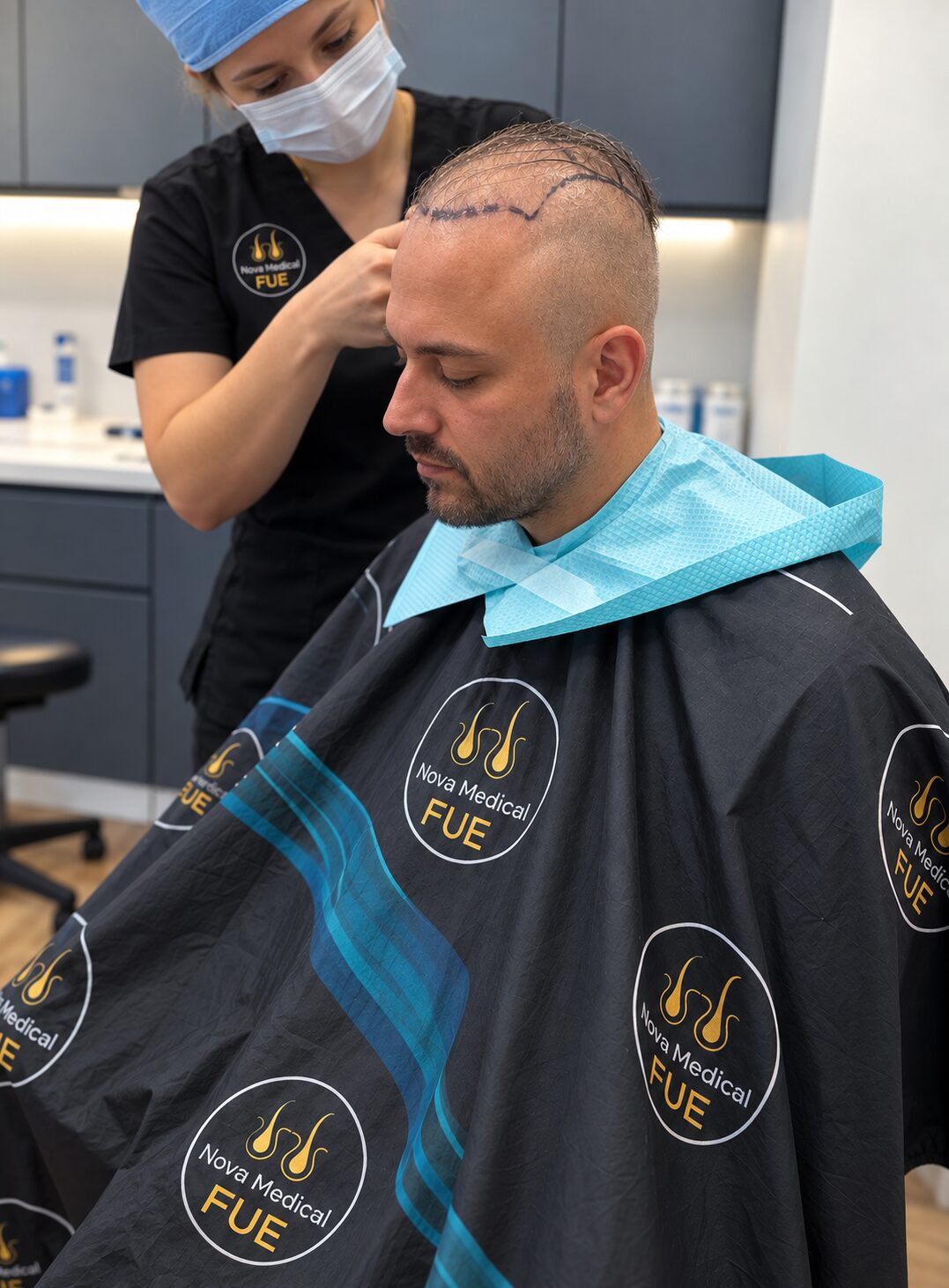
The technique in your plan, FUE (Follicular Unit Extraction) or FUT (the strip method, Follicular Unit Transplantation), decides what is trimmed. FUE patients have the donor area cut short, while FUT patients only have the strip area clipped.
You then move into the procedure room, where local anesthetic numbs the treatment areas so you stay comfortable. Using magnification, the team harvests each graft carefully, and in FUE every follicle is taken out individually.
Every graft is counted by a technician as it comes out and kept cold in a labeled tray. One-hair grafts are saved for the hairline itself, and grafts with two or three hairs fill the rows behind it to add body without making the front look dense or heavy.
Patients are welcome to unwind during this phase. Headphones, a playlist or a favorite podcast all help, and plenty of people simply doze. Many are surprised at how peaceful it feels.
Lunch arrives around the middle of the day, and you can pause to stand, stretch or step out to the restroom. A member of the team is with you throughout, so you never wait long for an answer.
After harvesting, the grafts are inspected under a microscope. The placement phase then begins: the team makes a tiny site for each graft and sets it in at once, following your natural growth direction, spacing and density.
Sites are angled to follow the way the hair beside them already grows, forward, to the side or in a whorl at the crown. Spacing is slightly wider at the very edge and tighter further back, which stops the finished hairline from looking too perfect.
You relax in a reclined chair while the team finishes placing the grafts. Patients often tell us this part was far easier than they had imagined.
Before you go, a nurse walks you through your written aftercare, gives you a soft cap to wear home and schedules your first follow-up visit. Because the clinic is in Louisville, getting back for check-ins is easy, and you have the clinic number for any questions during the first nights.
Hear from local patients directly by reading our reviews and patient stories and learn why so many Louisville residents trust Nova Medical Hair Transplant Kentucky with their hair.
After Your Procedure: Recovery and Growth
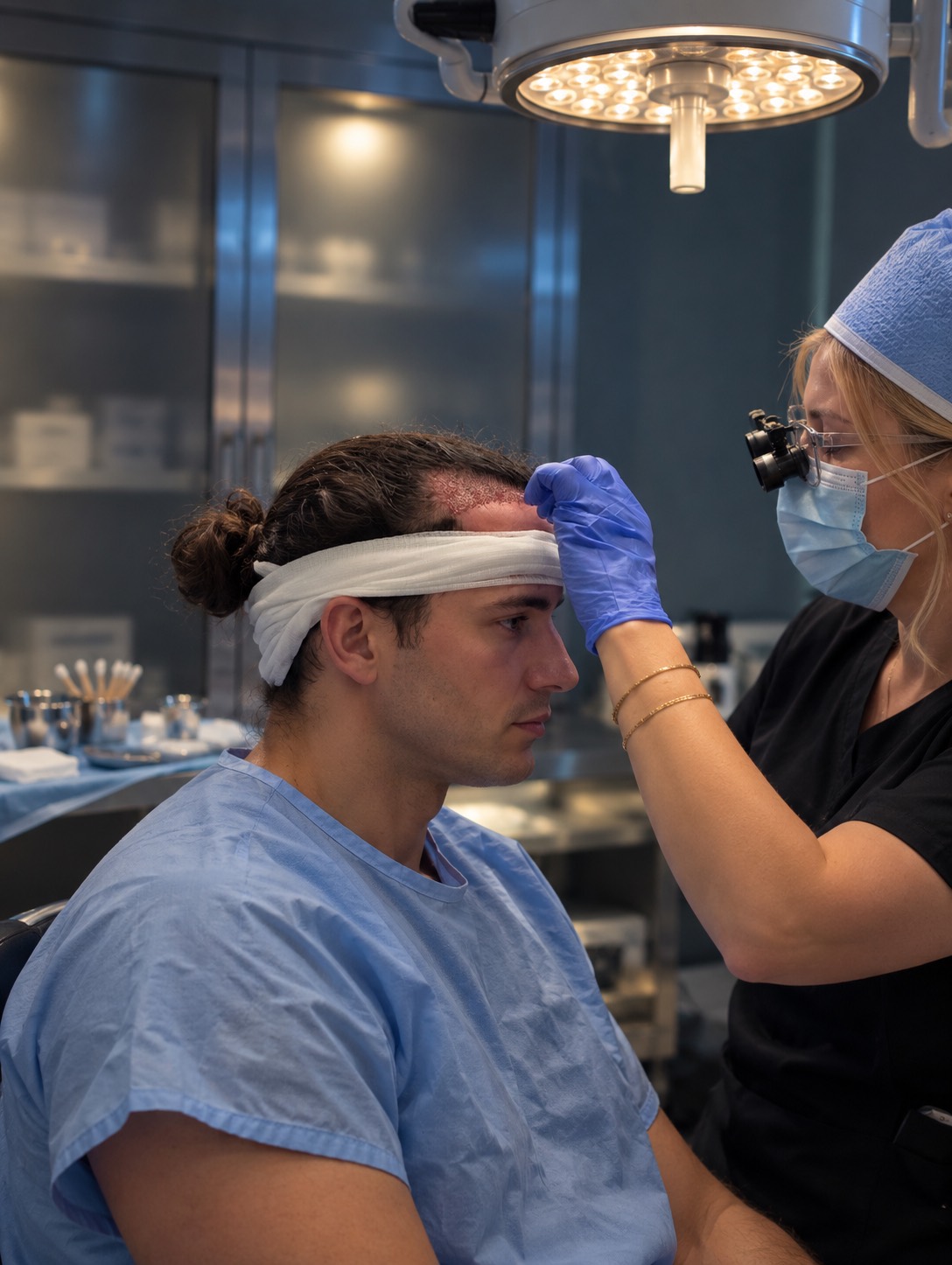
When the procedure is finished, there are no bulky bandages to deal with. Most Louisville patients leave without visible dressings and go home feeling comfortable, and the new hairline shape can be seen right away.
Your recovery plan is written for you. Many patients are prescribed antibiotics and an anti-inflammatory to keep swelling down early on, and a gentle pain reliever helps with sleep for the first night or two.
Downtime is short, so most people are back at work and handling light tasks within a day or two. You can wash your hair soon after the procedure, following the gentle routine the team explains before you leave.
Hold off on workouts, weightlifting and swimming for 1 to 2 weeks so the healing scalp is not disturbed.
Growth you can see tends to start around 4 to 6 months after surgery. Some patients add Minoxidil, a topical solution used nightly, to encourage growth and density.
Over 12 to 18 months the result fills in, and the transplanted hair keeps growing naturally for life, so the change lasts.
Protecting Your New Hair for Years to Come
Moved hair stays put, but the native hair nearby can continue to thin. To keep everything looking even, many patients follow surgery with ongoing care, such as prescription medication or PRP treatment, to support the hair they were born with.
The clinic's 12-month follow-up shows how your growth is coming along, and yearly check-ins after that make it easy to spot new thinning early. For Louisville patients, these visits fit easily into a normal week.
At home, a gentle shampoo, a hat for long days outdoors, and good sleep and diet all help keep your scalp healthy.