
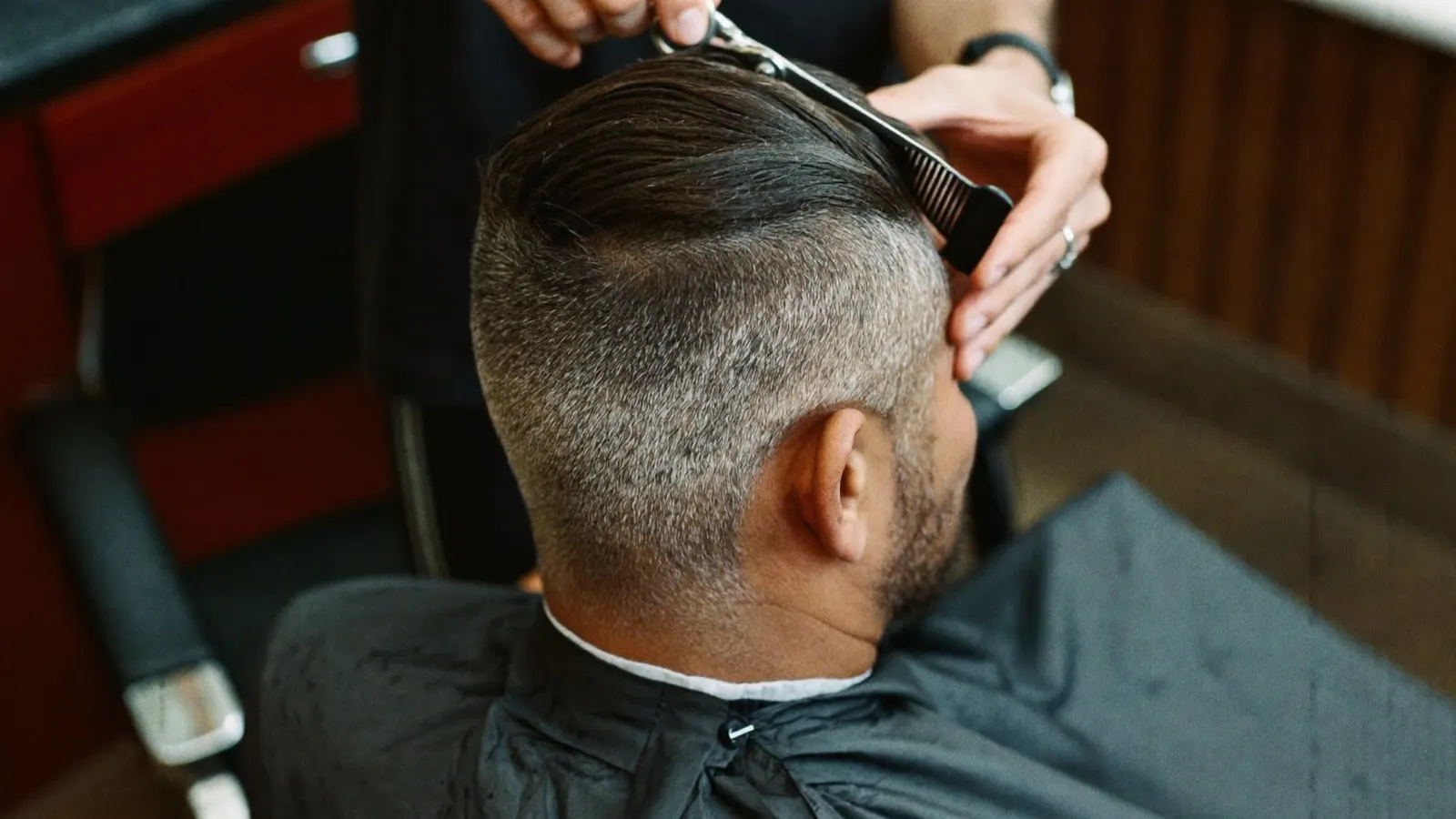
Hair transplant scars are the topic many patients are slow to raise out loud. People tend to worry quietly about whether a barber, a partner or a coworker will one day spot a mark at the back of the head and put two and two together. The honest answer depends mostly on two things: which technique is used and how short you like to keep your hair. An FUE hair transplant leaves a scattering of tiny dot scars across the donor area, while the strip method leaves a single fine line. With everyday haircuts, both are usually covered by the hair that surrounds them.
This guide looks at hair transplant scars without the sales gloss: what each type looks like once it has healed, how hair length changes the picture, how the marks mature over the first year, why one person's scars are easier to spot than another's, and what can be done if a scar ever does show. It is written for men and women in Louisville and across Kentucky who want to understand the trade-offs before they sit down for a consultation.
Quick answer: FUE = tiny dots, FUT = a fine line hidden by hair. FUE lifts follicles out one at a time, leaving small round marks spread thinly through the donor area that are very hard to see unless the back and sides are clipped close to the skin. FUT removes a narrow strip and leaves one thin line that the hair above it covers at most everyday lengths. Neither method is truly scar-free, but at normal hair lengths neither is usually noticeable.
Why Every Hair Transplant Leaves Some Kind of Mark
Whenever skin is opened, the body closes it with scar tissue. There is no way around that biology, and a hair transplant is no exception. The procedure works by moving follicles from the donor area, the band of permanent hair around the back and sides of the head, to places where hair has thinned. To free a follicle, the skin around it has to be opened, either with a tiny circular punch or by taking out a narrow strip. So when an advertisement promises a "scarless" transplant, what it really means is a scar you are unlikely to notice.
That distinction is useful, because it changes the question. Instead of asking "will I have a scar?", the better question is "what shape will it be, where will it sit, and what will keep it hidden for the hairstyles I actually want?" Once you frame it that way, the choice between techniques becomes much clearer.
The donor area happens to be a good place to hide small marks. Hair there grows thickly and keeps growing for life, because those follicles resist the hormone that drives pattern hair loss. A healed mark sitting beneath that hair is covered in the same way the rest of the scalp is covered. The real difference between methods is which kind of mark is easier to conceal at the length you like to wear.
What FUE Dot Scars Look Like Once Healed
In follicular unit extraction, each graft is lifted out individually with a very small round punch. Every extraction leaves a tiny circular opening that crusts over within days and then slowly turns into a small, pale dot. Because the extractions are spread across a wide area rather than grouped together, each dot is surrounded by untouched hair.
Up close, with the hair clipped right down to the skin, a trained eye can sometimes pick them out as faint specks a shade lighter than the surrounding scalp, a little like freckles in reverse. At any length where the hair lies over the skin, they effectively disappear. Many people who have had FUE wear short, neat cuts at the back for years without anyone commenting.
The final look depends heavily on how evenly the grafts are taken. When extractions are spaced across a broad zone, with healthy hair left between each site, the scattered dots blend into the natural texture of the scalp. When too many are taken from one patch, that area can look thinner and the dots can start to cluster. That is why the spacing of extractions matters as much as the total number of grafts, and why a sensible graft count is part of keeping the donor area discreet.
What an FUT Linear Scar Looks Like Once Healed
Follicular unit transplantation, often called the strip method, takes a different route. A narrow band of scalp is removed from the back of the head, the two edges are brought together and stitched, and the strip is divided into individual grafts under magnification. The result is a single fine line running sideways across the back of the scalp.
When it heals well, the line is thin and pale, and the hair directly above it falls down to cover it. At a medium length it is usually invisible, even when the hair is wet or parted. Our FUT (strip method) page explains how the donor edges are closed so that hair can grow up through the line itself, which breaks it up further and makes it harder to trace.
The linear scar becomes a concern mainly in two situations: when the back is clipped very short, and when the line heals wider than intended. How wide it ends up depends on the tension across the closure, how flexible your scalp is, how the area is treated while it heals and your own healing tendencies. A stretched line is the most common reason people look into repair years later, which is why the closure and the first weeks of aftercare deserve real attention.
FUE vs FUT Scars Side by Side
The two methods leave very different marks, and each has situations where it shows less. This comparison sums up the practical differences for patients choosing between them.
| Question | FUE (follicular unit extraction) | FUT (strip method) |
| Shape of the scar | Many tiny round dots spread out | One fine horizontal line |
| Where it sits | Scattered across the back and sides | Across the back of the head |
| Medium or longer hair | Hidden | Hidden |
| Short clipper cut | Usually hidden | Often covered, depends on length |
| Skin fade or shaved head | Faint specks may show up close | Line likely to show |
| Stitches | None in the donor area | Yes, removed at a follow-up visit |
| Main visibility risk | Too many grafts taken from one area | A line that stretches while healing |
| Camouflage if needed | Longer hair, SMP | Longer hair, SMP, FUE grafts into the line, revision |
Neither technique wins on every row. FUE suits people who like short back and sides or who may want to shave their head one day. FUT can suit people who keep their hair at a medium length or longer and want a large session from a single strip. The right choice comes from your hair loss, your donor supply and the way you wear your hair, and that is a decision for a consultation rather than a table.
How Hair Length Hides Each Type of Scar
Hair length is the single biggest factor in whether anyone sees a donor scar. It is worth thinking about honestly, because the haircut you have now may not be the haircut you want in ten years.
- Medium and longer cuts. Anything cut with scissors, or long enough to lie flat over the skin, covers both FUE dots and an FUT line. At these lengths most people are not visibly different from someone who never had surgery.
- Short clipper cuts. FUE dots are generally lost among the stubble. An FUT line is often still covered, but it depends on how short the guard is and how well the line healed, so it is worth testing with your barber once healing is complete.
- Skin fades and shaved heads. With the back taken right down to the skin, FUE dots may appear as faint specks to someone standing close, and an FUT line is likely to be visible. If this is your preferred style, say so early, because it shapes which technique makes sense.
Your barber will probably notice before anyone else does, simply because barbers spend their days looking at the back of people's heads. That is nothing to worry about. Plenty of patients tell their barber outright and ask for a touch more length over the donor area for the first few months while the marks settle. A good barber can then adjust the taper so it sits naturally.
It also helps to think ahead. Someone in their twenties who likes longer hair today may decide to go very short later if thinning continues elsewhere. Choosing a technique only for today's haircut can box you in. Talk through the styles you might realistically want over the years, not just the one you walk in with.
The Healing Timeline: From Fresh Wound to Faded Mark
Donor marks change a great deal over the first year. Knowing roughly what to expect stops normal healing from looking like a problem.
The first few days. After FUE, the donor area is pink and dotted with tiny crusts where each graft was taken. After FUT, there is a stitched line with some tightness and tenderness when you move your neck. Either way, the area looks more obvious now than it ever will again.
The first two weeks. FUE crusts loosen and shed with gentle washing, leaving small pink dots. FUT stitches are taken out at a short visit to the clinic, usually between seven and ten days after surgery. Because the donor hair was only trimmed, it starts growing back right away and begins covering the area within a couple of weeks.
Months one to six. The marks fade from pink toward a paler tone. They may look a little more noticeable in bright sun or after exercise, when the scalp flushes. Scar tissue is still remodeling during this stage, so the appearance at three months is not the final picture.
Six to twelve months. Scars mature, flatten and lighten. For most people, this is when the donor area settles into its long-term look. If you have been holding off on a shorter haircut, this is generally the time to try it, ideally after a check with the clinic. Our guide to normal healing signs covers redness, itching and crusting in more detail for the early weeks.
What Makes a Scar More or Less Visible
Two people can have the same procedure and end up with marks that look quite different. These are the main reasons why.
- Contrast between hair and skin. Healed scars are usually paler than the scalp around them. On someone with dark hair and a darker scalp, a pale dot or line stands out more when the hair is shaved. Light hair on fair skin tends to hide marks more easily.
- Donor density. Thick donor hair covers marks well. Finer or sparser donor hair offers less cover, which makes careful spacing and conservative graft counts more important.
- How grafts are spread. Even, well-spaced extractions blend in. Concentrated extractions in one patch can thin that area and make dots easier to see.
- Tension and scalp flexibility. For FUT, a tight scalp or a wide strip puts more stress on the closure, which raises the chance of a wider line.
- Your own healing tendency. Some people form raised or thickened scars. If you have a history of keloids or raised scars anywhere on your body, mention it at consultation, because it affects planning.
- Sun exposure. Scar tissue does not tan the way normal skin does, so a pale mark can look more obvious against a sun-darkened scalp. Shade and a hat in the first months help.
- More than one procedure. Each session adds marks. A second strip surgery adds to the existing line or creates another one, and repeated FUE sessions add more dots, so the long-term plan matters from the first visit.
Does the Recipient Area Scar Too?
Most worry focuses on the donor area, and for good reason, because the recipient area rarely shows lasting marks. Grafts are set into very small openings made in the thinning areas. In the first week or two these show as tiny crusts around each new graft, which shed with gentle washing as directed by your aftercare sheet.
Once those sites heal, the transplanted hairs grow out of them, and the hair itself covers the skin. In typical cases there is nothing to see at the front once growth comes in. Lasting marks in the recipient area are uncommon and are usually linked to unusual healing, infection or older techniques that used much larger grafts. If you see anything at the front that worries you during healing, contact the clinic rather than waiting.
How Scars Are Kept to a Minimum
A discreet donor area comes from careful planning on the clinic's side and careful aftercare on yours. Both matter.
What the clinic controls. The donor area is assessed before any graft count is agreed: density, hair caliber, scalp flexibility and any history of difficult scarring. Punch size is matched to your follicles, and extractions are spread evenly across a safe zone rather than taken from one spot. For FUT, the strip is sized to what your scalp can comfortably close, and the edges are brought together with as little tension as possible. Graft numbers are set by what your donor area can spare, not by a package.
What you control. The weeks after surgery have a real effect on how the donor area heals. A few habits make the biggest difference:
- Keep the area clean and wash it exactly as your aftercare sheet describes.
- Let crusts fall away on their own; picking or scratching them can leave a more noticeable mark.
- After FUT, avoid heavy lifting and hard neck flexing until the doctor clears it, so the line is not stretched while it knits.
- Keep the scalp out of strong sun for the first months and wear a loose hat when you are outdoors for long.
- Avoid smoking and nicotine around surgery, as they reduce blood flow and slow healing.
- Go to your follow-up visits so any slow-healing spot is caught early.
If a Scar Does Show: Camouflage and Repair
Most patients never need to do anything about their donor scars. If yours do show, whether from an older procedure or a haircut you have since changed to, there are several options, from simple to surgical.
A little more length. The easiest fix is often to leave the back slightly longer. Even a small change in clipper guard can be enough to cover faint FUE dots or a fine line.
Scalp micropigmentation. SMP places tiny dots of pigment in the skin to match the look of short hair follicles. Pigment can be blended into FUE dots or along an FUT line so the area reads as normal stubble. Our comparison of scalp micropigmentation vs. hair transplant explains how SMP works and how it is often paired with a transplant.
Grafts into the scar. Follicles can be placed directly into a linear scar so hair grows through it and interrupts the line. This is a common way to soften an older strip scar, though scar tissue has a poorer blood supply than normal scalp, so expectations and density are planned conservatively.
Surgical revision. A wide or stretched line can sometimes be cut out and closed again with less tension. That swaps one scar for a finer one rather than removing it altogether, and it depends on how flexible the scalp is. Our guide to hair transplant scar revision covers who is suited to each repair route and what improvement is realistic.
Hair fibers and concealer sprays can also help in the short term while a longer-term option is planned.
How Our FUE Protocol Plans for a Discreet Donor Area
At our Louisville clinic, the donor area is treated as a lifetime resource, and keeping it discreet is part of the plan from the first appointment. Dr. Alexander Digenis oversees each assessment, examines the donor area and asks how you wear your hair now and how you might want to wear it later. Those answers help decide between FUE and FUT and shape how many grafts are proposed.
Our FUE Protocol sets out each step from consultation to follow-up. Grafts are extracted and placed by a trained team under the direct supervision of Dr. Alexander Digenis, who designs the hairline and plans where grafts are taken from so the donor area thins evenly rather than in patches. You leave with written aftercare instructions for both the donor and recipient areas, and follow-up visits include a check of how the donor area is healing.
If you already have a scar from a previous procedure, bring photographs or simply let the team see it at your visit. The doctor can explain whether camouflage, grafting or revision makes sense for your situation. Individual results vary.
Key Takeaways
- Every hair transplant leaves some kind of mark, but at normal hair lengths most hair transplant scars are not noticeable.
- FUE leaves many tiny dot scars spread through the donor area; FUT leaves one fine line across the back of the head.
- Hair length is the biggest factor. Medium cuts hide both; very short fades and shaved heads are where scars can show.
- Donor marks fade and flatten over the first year, so judge the final look after the scalp has fully matured.
- Even extraction, a sensible graft count, low-tension closure and good aftercare keep scars discreet.
- If a scar shows, options include a little more length, SMP, grafts into the scar and surgical revision.
Frequently Asked Questions
Talk Through Your Scar Concerns in Louisville
Worrying about a visible scar is a perfectly reasonable reason to hesitate. At a free consultation in Louisville, the team will look at your donor area, talk through the haircuts you want to keep open, and explain which approach is likely to leave a discreet result for you, with no pressure to book.
Want to know how your donor area would heal? Ask about scar-minimal options and book your free assessment.