
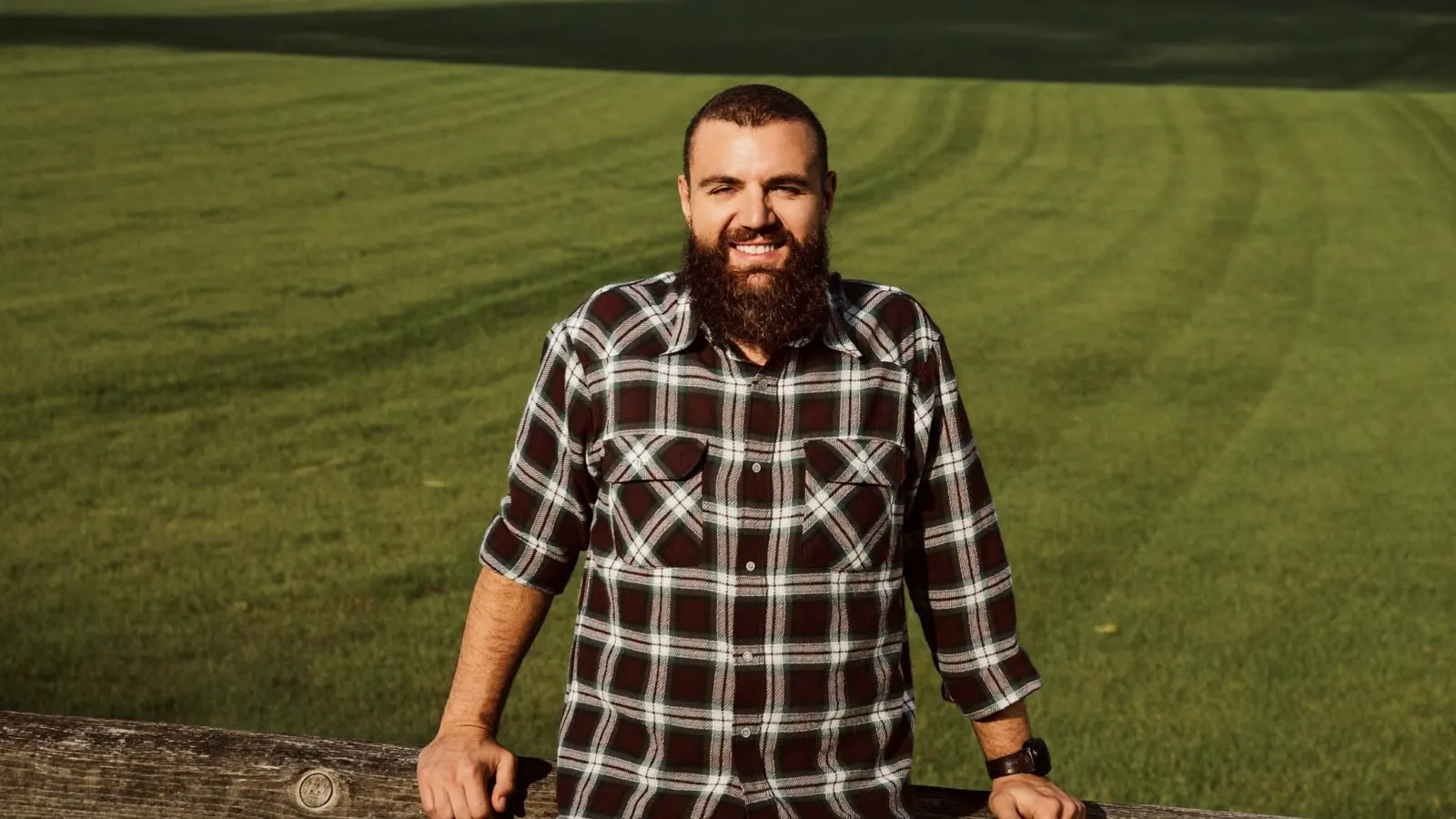
Most people know a beard transplant as a way to move hair from the scalp onto the face. A beard to scalp hair transplant runs that idea in the other direction: follicles are taken from a full, healthy beard and placed on the head to add coverage where scalp donor hair alone cannot stretch far enough. It is a niche technique, it is not right for everyone, and it works on different terms from a standard procedure. This guide explains when facial hair is considered as a donor source, what it can and cannot add, and how it is usually combined with hair from the back of the scalp.
It is written for men in Louisville and across Kentucky who have heard that their beard could "save" a transplant and want a plain account before they book a consultation. Every case is different, so treat this as background reading for a conversation with the doctor, not as a plan in itself.
Quick answer: beard grafts extend donor supply; they work well mixed with scalp hair. Facial hair is thick and resists the hormone behind pattern hair loss, so it can add grafts when the back of the head is running low. It grows differently from scalp hair, though, so it is normally placed behind the hairline, through the mid-scalp and crown, while scalp grafts keep the front edge soft and natural.
Why a Beard Can Act as a Donor Area
Any hair transplant depends on one simple principle: a follicle keeps the character of the place it came from. Hair at the back and sides of the scalp is moved to the top of the head because it does not respond to the hormone signals that make top-of-head follicles shrink over time. Once relocated, it keeps growing as it always did.
Beard follicles share that resistance. In fact, beard growth is driven by the same family of hormones that thins the crown, which is why many men with advanced hair loss carry a dense, coarse beard. That combination makes the beard the most practical non-scalp source of grafts for most male patients. Hair from the chest or elsewhere on the body can also be used, but it tends to be finer and harder to work with, and our body hair transplant guide covers those wider options. This article stays with the face.
The important caveat is that a beard is a supplement, not a second scalp. Beard hair grows in a different rhythm, has a different shape and sits in the skin at a different angle. Those differences decide where it can go on the head and how much it can realistically contribute.
When Beard Grafts Enter the Conversation
Nobody needs beard hair for a modest hairline restoration. It comes up in a fairly narrow set of situations, nearly all of which share one feature: the scalp donor area cannot supply everything the plan calls for.
- Extensive loss. When thinning has spread from the front through the crown, the area to cover can outgrow what the back of the scalp can safely give.
- A naturally sparse donor area. Some men have fine or low-density hair at the back and sides even without much loss elsewhere, which limits how many grafts can be spared.
- A donor area already used. Patients who have had one or more earlier procedures may find their remaining scalp supply is smaller than it looks.
- Protecting the back of the head. Taking a share of grafts from the beard can mean fewer are needed from the scalp, keeping the donor zone looking full at short haircut lengths.
That last point matters more than people expect. The donor area cannot be refilled, and taking too much from it leaves a thin, see-through look that is hard to correct. Our article on protecting the donor area from overharvesting explains why a careful lifetime budget beats squeezing every possible graft out of a single session. Facial hair is one way to ease pressure on that budget.
Texture Matching: The Central Trade-Off
If beard hair grew exactly like scalp hair, it would be used far more often. The reason it is reserved for certain cases comes down to how it looks once it is growing on the head.
Thickness. Individual beard hairs are usually coarser than scalp hairs. That can be an advantage, because a thicker shaft covers more skin and makes an area look denser. It is also a drawback at the front, where coarse hairs stand out against the fine, soft hairs that form a natural hairline.
Shape and curl. Facial hair often has more wave or kink than the hair on the head, and the color can differ too. Many men notice reddish or lighter tones in the beard that do not appear on the scalp, along with gray that arrives in the beard earlier.
Growth cycle and length. Beard hair has a shorter growing phase than scalp hair. In practice that means it usually reaches a shorter maximum length before it sheds and restarts. Someone who wears their hair short may barely notice; someone hoping to grow long hair on top will see more of a difference.
Grouping. Scalp hair tends to grow in natural clusters of two, three or four hairs, while beard follicles are more often single hairs. Each beard graft therefore tends to carry fewer hairs than a typical scalp graft.
| Feature | Scalp donor grafts | Beard donor grafts |
| Hair thickness | Matches the hair already on the head | Usually coarser |
| Hairs per graft | Often grouped in twos and threes | More often single hairs |
| Length it can reach | Long, matching existing scalp hair | Usually shorter |
| Texture and color | A natural match | May be curlier, lighter or grayer |
| Where it suits the head | Anywhere, including the hairline | Mid-scalp and crown, behind the front edge |
| Main role in a plan | The foundation of the result | A supplement that adds density |
None of these differences makes beard hair a poor choice. They make it a specialized one, and they explain why a good plan uses it only where its traits help rather than hurt.
Where Beard Grafts Belong on the Head
Think of the scalp as a set of zones that people look at in different ways. The hairline and the frontal area are seen face to face, in good light, at conversational distance. The mid-scalp and crown are mostly seen from above or from behind, and usually at a distance. That difference shapes where beard grafts go.
The front edge is built from the finest scalp hair available, ideally single-hair grafts, because softness there is what makes a hairline look like it has always been there. Coarse beard hairs in that row tend to look stiff or wiry, so they are generally kept out of it.
Just behind the hairline is a different story. Here the goal is to stop light from shining through the hair, and a thicker shaft does that job well. Placed among scalp grafts in the region directly behind the front edge, beard hairs can add a sense of body without drawing the eye. The same logic applies through the mid-scalp and into the crown, where density and coverage count for more than the fine detail of each hair.
Beard grafts can also play a role in some repair work, such as adding coverage to an area thinned by an earlier procedure, though any repair plan depends on what is left to work with and should be assessed in person.
Combining Beard and Scalp Donor Hair
In almost every case where facial hair is used, it is used alongside scalp hair rather than instead of it. The planning question is how to divide the work between the two sources so that each type of hair lands in the zone where its natural traits are an asset rather than a giveaway.
A typical approach runs in layers. Scalp grafts form the hairline and the frontal third. A blend of scalp and beard grafts fills the area just behind that. The crown, if it is part of the plan, may take a larger share of beard hair because it is viewed from a distance and benefits from the extra thickness. Mixing the two sources, rather than placing them in separate blocks, helps any difference in texture disappear into the overall look.
Most beard harvesting is done with the follicular unit extraction method, because individual follicles have to be lifted out of facial skin one at a time. If you are new to the basics of that technique, our page on FUE hair transplant surgery explains how single follicles are extracted and prepared before they are placed. The same principles apply to facial hair, with extra care for the shallower angle at which beard follicles sit.
How Beard Grafts Are Harvested
Harvesting from the face follows a careful sequence. The beard is trimmed short so the direction of each hair can be seen. The donor zones are marked, usually under the chin and along the neck and lower jaw, where a mild reduction in density is least likely to be noticed. Areas that define the shape of the beard, such as the mustache, the cheek line and the front of the chin, are typically protected or used sparingly.
Local anesthetic numbs the area, and grafts are lifted out individually with a very small punch, spaced out so that no single patch is thinned. Because beard follicles exit the skin at a low angle and can curve beneath the surface, the extraction takes patience and a steady, experienced team. Grafts are then checked and sorted under magnification and kept in a cool holding solution until they are placed on the scalp.
At a clinic run on the Nova model, the plan for any procedure is designed and directed by the doctor, with trained technicians carrying out the hands-on steps under supervision. Dr. Alexander Digenis oversees consultations, donor assessment and the overall plan at our Louisville clinic.
What Happens to Your Beard Afterwards
This is the question many men care about most. Will the beard look different?
When extraction is spread thinly and taken from the right zones, most men find the beard looks much as it did before, especially at a medium length. The change is a modest reduction in density in areas that are not usually on display. Men who keep a very full beard generally have the most room to spare. Men with a patchy or thin beard have less, and may not be suitable at all.
Each extraction leaves a tiny healed mark. On the scalp those marks hide under hair. On the face, they hide under beard growth, which is why men who like to stay completely clean-shaven should raise that at consultation. Close-up, with the skin shaved smooth, some faint dots may be visible on certain skin types. Redness in the donor area usually settles over the following weeks, and the beard can be trimmed again once the doctor confirms the area has healed.
It is also worth remembering that beard hair taken for the scalp is hair that cannot be used later for something else. If you might want to fill in part of your beard in the future, that should be part of the conversation now.
Recovery and Growth
Recovery on the scalp is the same as for any follicular extraction procedure. Small crusts form on the treated areas and fall away during the first couple of weeks. The transplanted hairs then shed, which is normal, before new growth starts from the follicles beneath the skin some months later. Results continue to mature well into the first year.
The beard donor area adds a second site to look after. Expect some tenderness and redness under the chin and along the neck for several days, and follow the shaving and washing instructions you are given. Grafts taken from the beard can lag a little behind scalp grafts placed on the same day, so patience matters. It is reasonable to judge the final look only once everything has had time to grow in fully. Individual results vary.
Who Is Not a Good Fit
Being honest about limits is part of a sound plan. A beard to scalp hair transplant is usually not recommended when:
- The beard is thin, patchy or still filling in, so there is little to spare without spoiling its look.
- Hair loss is advancing quickly and has not been assessed or stabilized, which makes future needs hard to predict.
- The loss is diffuse rather than patterned, affecting the donor zones as well as the top.
- The patient wants long hair on top and expects the beard grafts to grow to the same length.
- The person prefers to stay clean-shaven and is concerned about any visible marks on the neck or chin.
- The scalp donor area alone can comfortably cover the plan, in which case there is little reason to involve the face at all.
For many patients the right answer turns out to be a well-planned scalp-only procedure, possibly staged over time, with medical treatment to slow further loss. Beard grafts are a tool to keep in reserve, not a default.
Questions to Bring to Your Assessment
If you are wondering whether your beard could help, a few questions will make your consultation more useful:
- How much can my scalp donor area safely provide over my lifetime, and does my plan need more than that?
- Is my beard dense and coarse enough to be a realistic donor source?
- Which parts of my beard would be used, and how would it look afterwards at the length I usually keep it?
- Where on my head would beard grafts go, and how would they be blended with scalp grafts?
- How will the texture and color of my beard compare with my scalp hair once it grows in?
- Would a staged plan or non-surgical treatment be a better first step for me?
Bring a few recent photos of your hair and beard at different lengths if you have them. They help the team picture how each option might look in daily life.
Key Takeaways
- A beard to scalp hair transplant moves follicles from facial hair onto the head to add grafts when scalp donor hair is limited.
- Beard hair resists the hormone behind pattern loss, so it keeps growing once moved, but it is coarser, more often single-haired and grows shorter than scalp hair.
- It suits the area behind the hairline, the mid-scalp and the crown; the hairline itself is usually built from fine scalp hair.
- It is almost always combined with scalp grafts rather than used alone.
- A full, dense beard is a prerequisite, and men who stay clean-shaven should discuss donor marks first.
- Whether it makes sense for you depends on an in-person look at both donor areas.
Frequently Asked Questions
Find Out If Your Beard Could Help
A beard is not something to spend without a plan. At a free consultation in Louisville, the team will look at your scalp donor area and your beard, talk through the coverage you want, and tell you plainly whether facial hair would add anything worthwhile in your case, with no pressure to book.
Not sure your scalp has enough hair to spare? Ask about donor options and book your free assessment.