
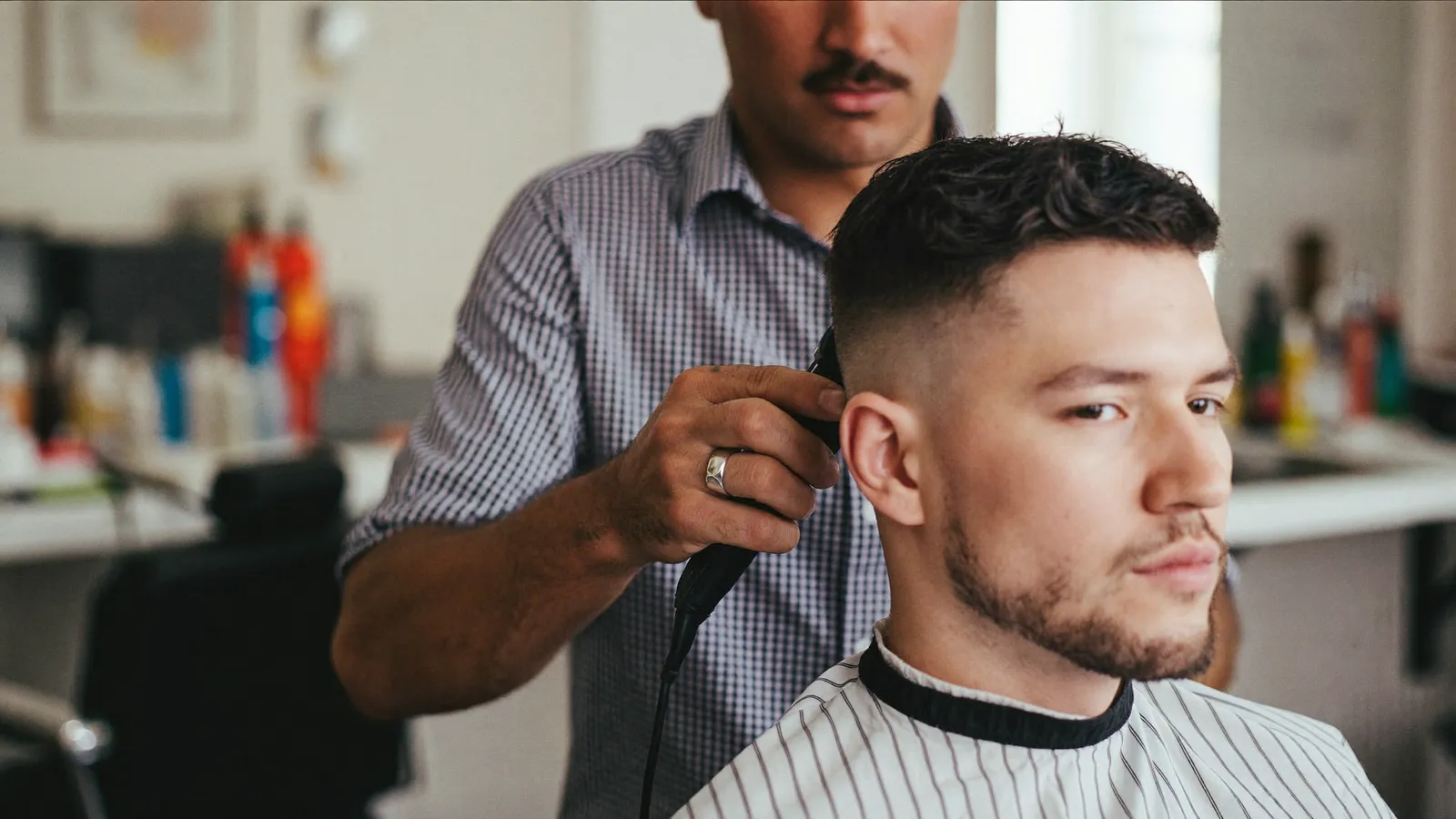
Few aftercare questions come up as often as this one: when is it safe to get a haircut, touch up your color or go back to your usual styling routine? Cutting hair after a transplant, coloring hair after a transplant and picking up a blow-dryer again each come with their own waiting period, and the three are not the same. This guide lays out a practical timeline for each, explains why the waits exist, and covers how to brief your barber or stylist so the first appointments go smoothly. It builds on the wider hair transplant recovery advice our Louisville team gives every patient.
Treat the timings below as typical ranges rather than rules written for your scalp. Your written aftercare sheet, and what the doctor sees at your follow-up visits, always come first. Some people heal faster than average and some need longer, and the plan you had, the technique used and your own skin all play a part.
Quick answer: a gentle scissor trim is usually fine at about 3 to 4 weeks. Guarded clippers on the back and sides often return around the same point, but close clippers or a skin fade over the transplanted area are best left until about 6 months or later. Hair dye, bleach, perms and relaxers wait 6 to 8 weeks. Low, cool blow-drying usually returns after about 2 weeks, and flat irons or curling irons after about 4.
Why Timing Matters in the First Weeks
Right after surgery, each graft sits in a tiny opening in the skin. For roughly the first week to ten days, those grafts are still settling in and can be knocked loose by friction, pulling or pressure. Small crusts form around each one, and they need to soften and lift away on their own during gentle washing rather than being scraped off by a comb or a clipper blade.
Once the grafts are secure, the skin itself is still recovering. It can stay pink and sensitive for weeks, and the surface is more reactive than usual. Products that a healthy scalp shrugs off, such as the peroxide in hair color or the alkaline chemicals in a relaxer, can sting, inflame or dry out skin that is still healing. Inflammation around young follicles is exactly what you want to avoid while new hair is getting ready to grow.
There is also a sensation issue that many people do not expect. Parts of the scalp often feel numb or tingly for a while after a procedure. Numb skin is poor at warning you about heat or a blade dragging too hard, so a dryer held too close or a barber pressing firmly can do harm before you notice anything. That is one of the main reasons heat and clippers wait longer than most people guess.
A Safe Timeline at a Glance
Use this table as a planning guide when you book appointments or buy products. Each row assumes healing is on track; if your scalp is still red, crusted or tender at that point, push the date back.
| Activity | Typical earliest point | Notes |
| Scissor trim on top | About 3 to 4 weeks | Light trim only, no pulling, no firm combing across the grafts |
| Guarded clippers on back and sides | About 3 to 4 weeks | Once the donor area has healed; keep a longer guard at first |
| Close clippers, fade or razor over the transplanted area | About 6 months or later | Wait until new hair has grown in and the skin has fully calmed |
| Permanent dye, bleach or highlights | 6 to 8 weeks | Gentle formula, patch test first, keep product off the scalp where possible |
| Perm, relaxer or keratin treatment | 6 to 8 weeks or more | Among the harshest treatments; ask the doctor before booking |
| Blow-dryer on a cool or low setting | About 2 weeks | Hold it at a distance and keep it moving |
| Flat iron, curling iron or hot brush | About 4 weeks | Keep hot plates away from the scalp itself |
| Light gel, cream or paste | About 2 weeks | Only once crusts are gone; rinse out fully every night |
| Hairspray, dry shampoo or hair fibers | About 2 to 4 weeks | Ask at your follow-up; avoid anything that needs scrubbing to remove |
Notice the pattern: anything that touches the hair shaft lightly comes back first, anything that heats or chemically treats the skin comes back later, and anything that cuts very close to the transplanted skin waits longest of all.
Haircuts: Scissors First, Clippers Later
For the first few weeks, the simplest plan is to leave the hair alone. Most people find their grown-out hair around the sides helps disguise the donor area anyway. When the itch to tidy up arrives, a scissor trim at around three to four weeks is the usual starting point, provided the scalp has stopped crusting and the doctor is happy with how things look.
That first cut should be gentle and short in every sense. Ask for a light trim rather than a restyle, with length kept on top so the area is covered while it settles. The barber should avoid dragging a comb firmly across the grafts, skip the hot towel, and use a gentle stream of lukewarm water if they wash your hair. A quick shampoo at the basin is generally fine at this point as long as nobody scrubs the scalp hard or gives you a vigorous scalp massage.
Around the same stage, many patients notice the transplanted hairs falling out. That shedding is an expected part of the cycle, and it can make the top look thinner than it did right after surgery. Our month-by-month growth timeline explains why it happens and when new growth usually appears, which helps you avoid overreacting with a dramatic haircut during a phase that is meant to be temporary.
Clippers on the Donor Area vs the Recipient Area
The back and sides of the head, where grafts were taken, and the top or front, where grafts were placed, heal on different terms. That is why the clipper question has two answers.
Donor area. Once the small extraction sites have closed and any redness has faded, clippers with a guard are usually fine, often from around three to four weeks. Start with a longer guard than you normally use. Very short skin fades on the back and sides can show the tiny healed marks left by extraction, especially in the first months while they are still pink, so many patients keep a little more length there until everything has matured. If you had a strip procedure, the linear scar needs the same patience, and the length you can comfortably wear depends on how that line has healed.
Recipient area. Close clippers, razors and tight fades over the transplanted zone belong at the end of the timeline, at about six months or later. By then, most of the new hair is through the skin, the scalp has settled, and a blade moving against it is far less likely to irritate young follicles. Going very short on top too early also has a cosmetic cost: it exposes any lingering redness and the uneven early stage of regrowth, which can make results look worse than they will be once the hair has thickened.
If you are someone who wears a buzz cut all year, raise that at consultation. It changes how the doctor thinks about donor spacing and hairline design, and it helps set realistic expectations about when your usual look will return.
Coloring, Bleaching and Chemical Treatments
Hair color is the area where patients most often want to move faster than they should. The common guidance on our site is to stop dyeing a week or two before surgery and to wait 6 to 8 weeks afterward before coloring again. That window gives the skin time to close fully and calm down before it meets products designed to open up the hair shaft.
Permanent and demi-permanent dyes usually rely on an alkaline agent and peroxide to work, and some contain dye compounds that can trigger irritation or allergy in sensitive skin. Bleach is stronger still. On healing skin, those ingredients raise the risk of stinging, redness, itching and inflammation around the follicles. Perms, chemical relaxers and some smoothing treatments are similar or harsher, so they sit at the far end of the wait and are worth a direct conversation with the doctor before you book.
When you are cleared to color again, a few habits make the first session easier on your scalp:
- Do a patch test 48 hours ahead, even with a brand you have used for years. Healing skin can react differently than it used to.
- Ask for a gentler formula, such as a low-ammonia or ammonia-free option, and avoid leaving product on longer than necessary.
- Keep color off the scalp where you can. Foils, highlights and techniques that start slightly away from the root put less product on the skin than an all-over root application.
- Skip the heat cap or hood dryer that some salons use to speed processing.
- Rinse thoroughly with lukewarm water and a mild shampoo, then follow your normal aftercare routine.
Men covering gray at home should apply the same rules to quick-tone and root kits. They are marketed as simple, but they are still chemical treatments, and the healing scalp does not know the difference.
Heat Styling and Blow-Drying
For the first two weeks or so, let your hair air dry after gentle washing and pat it with a soft towel rather than rubbing. After that, a blow-dryer on a cool or low setting is usually fine. Hold it well away from the head, keep it moving and point it along the hair rather than straight down at the scalp. Because some skin may still feel numb, check the temperature on the back of your hand first.
Flat irons, curling irons and hot brushes typically wait until about four weeks, and even then the hot surface should stay on the lengths of the hair and away from the skin. A heat protectant spray on the hair, not the scalp, helps keep new and existing strands in good condition. If you normally use high heat every day, this is a good time to scale back: young transplanted hairs are fine at first and benefit from the same care as any delicate hair.
Gels, Pomades, Sprays and Fibers
Styling products come back once the crusts have gone and the scalp washes clean, which for many people is around the two-week mark. Start with light, water-based creams or gels that rinse out easily. Apply them to the hair with your fingertips and avoid rubbing them into the skin. Heavy clays, waxes and oil-based pomades that need hard scrubbing to remove are better left for later.
Hairsprays and dry shampoos often contain alcohol and propellants that can dry or sting a sensitive scalp, so hold the can at a distance and use them sparingly at first. Hair fibers and concealers can be helpful during the shedding phase, when the top may look thinner for a while, but ask at your follow-up before you start. They need to be washed out completely each night so they do not build up around the follicles.
If you would rather cover the area than style it during the early weeks, a loose hat is often simpler. Our guide to wearing a hat after a hair transplant explains which styles are gentle on the grafts and when each one is usually fine.
How to Brief Your Barber or Stylist
Your barber or stylist does not need your full medical history, but they do need to know that the scalp is healing. A short conversation before the cape goes on prevents most problems. If your regular shop is in Louisville or elsewhere in Kentucky, a quick call ahead also lets them book you at a quieter time so nobody feels rushed.
- Tell them roughly when your procedure was and which areas were treated.
- Ask for scissors only on top and a longer guard on the back and sides.
- Ask them to avoid a razor or trimmer around the hairline.
- Turn down the hot towel, the scalp massage and any strong tonic or aftershave on the scalp.
- For color, show your colorist this timeline and your aftercare sheet, and agree on a patch test first.
Most professionals are glad to adapt. If anyone dismisses your concerns or rushes the work, it is reasonable to wait and find someone more careful for these first few months.
How Your Technique and Plan Change the Timeline
Not every recovery runs on the same clock. The number of grafts, the size of the area treated, your skin type and how closely you follow aftercare all affect healing speed. Technique matters too. Patients treated with our FUE Protocol heal with tiny dot-shaped donor marks spread across the back of the head rather than a single line, which often makes guarded clipper cuts on the sides practical sooner. A strip procedure leaves a linear scar that needs time to mature before short lengths look their best.
Whether the head was shaved also matters. Patients who kept their hair long often find it easier to wait for that first trim, while those who were shaved for the procedure may want a tidy-up sooner as everything grows out unevenly. Either way, the doctor reviews your progress at follow-up and can give a personal go-ahead for each step.
Signs You Should Wait Longer
A calendar date is only part of the picture. Hold off on cutting, coloring or heat styling, and call the clinic, if you notice any of the following:
- Redness that is getting worse rather than fading.
- Crusts that are still attached well past the first couple of weeks.
- Pimple-like bumps, swelling or tenderness in the treated area.
- Itching or burning that flares after using a product.
- Any reaction to a patch test, however mild.
These are usually manageable, but they are a clear sign your scalp needs more time before any chemical, blade or heat comes near it. Individual results vary, and so do recovery timelines.
Key Takeaways
- Light scissor trims usually come first, at around 3 to 4 weeks, once the scalp has stopped crusting.
- Guarded clippers on the back and sides can often return around the same time; close clippers and fades over the transplanted area wait until about 6 months or later.
- Hair dye, bleach, perms and relaxers wait 6 to 8 weeks, with a patch test and a gentle formula when you restart.
- Low, cool blow-drying returns after about 2 weeks and hot tools after about 4, kept away from the skin.
- Light, easy-rinse styling products are usually fine once the crusts are gone.
- Your aftercare sheet and the doctor's review at follow-up always take priority over any general timeline.
Frequently Asked Questions
Recovery Questions? Ask Us
Every scalp heals at its own pace, and a quick check can save you from a setback. If you are planning a haircut, a color appointment or an event and want to know whether your scalp is ready, our Louisville team is happy to look at your progress and give you a clear answer, with no pressure.
Thinking about a procedure and want to plan around your styling routine? Book your free assessment and we will walk you through it.